- English
- French
- German
- Portuguese
- Spanish
- Russian
- Japanese
- Korean
- Arabic
- Greek
- German
- Turkish
- Italian
- Danish
- Romanian
- Indonesian
- Czech
- Afrikaans
- Swedish
- Polish
- Basque
- Catalan
- Esperanto
- Hindi
- Lao
- Albanian
- Amharic
- Armenian
- Azerbaijani
- Belarusian
- Bengali
- Bosnian
- Bulgarian
- Cebuano
- Chichewa
- Corsican
- Croatian
- Dutch
- Estonian
- Filipino
- Finnish
- Frisian
- Galician
- Georgian
- Gujarati
- Haitian
- Hausa
- Hawaiian
- Hebrew
- Hmong
- Hungarian
- Icelandic
- Igbo
- Javanese
- Kannada
- Kazakh
- Khmer
- Kurdish
- Kyrgyz
- Latin
- Latvian
- Lithuanian
- Luxembou..
- Macedonian
- Malagasy
- Malay
- Malayalam
- Maltese
- Maori
- Marathi
- Mongolian
- Burmese
- Nepali
- Norwegian
- Pashto
- Persian
- Punjabi
- Serbian
- Sesotho
- Sinhala
- Slovak
- Slovenian
- Somali
- Samoan
- Scots Gaelic
- Shona
- Sindhi
- Sundanese
- Swahili
- Tajik
- Tamil
- Telugu
- Thai
- Ukrainian
- Urdu
- Uzbek
- Vietnamese
- Welsh
- Xhosa
- Yiddish
- Yoruba
- Zulu
How to achieve multi-slot expansion with NI-compatible zero-slot controller?
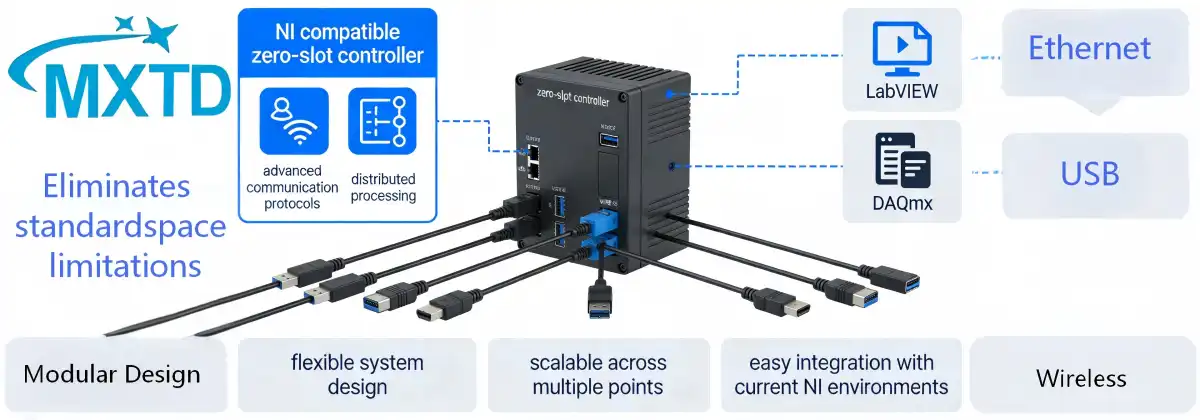
To get multi-slot expansion with zero-slot controller options that work with NI, you need to carefully set up modular designs that get rid of standard space limitations. These NI compatible zero-slot controllers use advanced communication protocols and distributed processing to allow growth across many measurement and control points without taking up any actual slot room. The zero-slot design uses Ethernet, USB, and wireless communication standards to make systems that are flexible, scalable, and easy to connect to current NI environments, such as the LabVIEW and DAQmx software platforms.
Understanding the Challenges of Multi-Slot Expansion
The ability to add more slots is an important part of modern industrial automation because it lets companies make complex measurement and control systems that can change as the project needs change. Traditional slot-based controller designs, on the other hand, pose big practical and financial problems that can make it very hard to complete a project.
Physical Space Limitations in Traditional Systems
Traditional slot controllers need their own room inside chassis systems, which can cause problems when growth needs are greater than the number of slots available. This limitation is especially annoying in defense and aerospace uses that need to make the best use of space. Engineers often have to rethink whole systems or spend a lot of money on upgrading frames in order to add measurement capabilities. This can cause projects to take longer than planned and cost more than planned.
Traditional slot-based methods are also hard to set up in the field because they take up a lot of space. Sometimes, research labs and places that test semiconductors don't have a lot of cabinet room, which makes it hard to fit the big chassis that are needed for standard multi-slot setups.
Integration and Compatibility Challenges
Software integration is yet another big problem that buying teams and system developers have to deal with. Traditional ways of expanding often involve complicated driver management and software setup steps that can make it harder for current LabVIEW programs to work together. When companies have to keep systems running on different software versions or combine old tools with newer measurement platforms, these integration problems get worse.
Hardware interface problems make attempts to expand even harder. Different slot types, power needs, and communication methods that don't always work together can make integration a headache that takes a lot of engineering time to fix. When system dependability is very important, like in mission-critical applications, these problems are even worse.
Core Principles Behind NI-Compatible Zero-Slot Controller Expansion
NI compatible zero-slot controller technology is a big change in the way modular systems are designed. It gets around the main problems with standard slot-based designs by using new ways of engineering. With this technology, companies can expand their systems in ways that have never been possible before, while still meeting the high standards of dependability and speed needed for industrial uses.
Modular Architecture Without Physical Constraints
The zero-slot method gets rid of the need for physical slots by spreading controller functions across modules that are linked to a network. Standardized standards allow each unit to work on its own while still communicating easily with the host system. With this distributed design, engineers can put measurement and control units exactly where they need to be, not just where chassis slots are available.
Network-based communication methods let central control systems and distributed units share data in real time. Timing-critical apps can keep accurate coordination across multiple measurement points thanks to advanced synchronization mechanisms, even when modules are physically spread out across big installations.
Advanced Communication and Synchronization
Modern zero-slot controllers use high-speed Ethernet communication standards to send and receive data in a way that is predictable, which is important for apps that need to be precise. The performance of these communication systems is the same as that of standard slot-based systems, even though they have more advanced features like hardware-timed processes, synchronized sampling, and distributed triggers.
The connection technology also allows for advanced diagnostic features that make maintaining and fixing problems with the system easier. Remote diagnostics and built-in health tracking make it easy for expert teams to find and fix problems quickly, which cuts down on system downtime and maintenance costs.
Step-by-Step Guide to Achieving Multi-Slot Expansion
To make sure the best performance and dependability, multi-slot growth must be carefully planned and carried out in a methodical way. This method has been used successfully in the past to set up zero-slot controller systems in industrial settings.
System Requirements Assessment and Planning
Before starting any development project, it's important to do a full analysis of the current system's powers and its needs for future growth. To set basic performance standards, engineers should write down the current measurement factors, data throughput needs, and timing requirements. During this part of the review, possible integration points are also found, and the network hardware needed for the operation of distributed controllers is evaluated.
Knowing the unique needs of the application helps figure out the best way to set up the controller and communicate. Different network designs may be needed for high-speed data acquisition applications compared to distributed control systems. Careful planning is needed to make sure that the configuration chosen can meet both present and expected future needs.
Hardware Selection and Configuration
To choose the right NI compatible zero-slot controllers, you have to compare their technical specs to the needs of the application. Sample rates, the number of input and output channels, the accuracy of the measurements, and the working surroundings are some of the most important things to think about. Both compatibility with existing software platforms and integration with existing system designs play a big role in the choice process.
When planning the configuration, you should think about how the network will be set up and how much data will be used for communication. To make sure that distributed systems perform the same way at all measuring places, data flow patterns and network load must be carefully thought through. Setting up backup communication routes and redundancy methods for mission-critical apps is also part of proper configuration.
Software Integration and Deployment
Setting up contact between zero-slot controllers and current LabVIEW or DAQmx applications is the first step in software integration. Standardized drivers and programming interfaces on modern devices make it easier to integrate new features while still working with current code bases. This method lets businesses use the tools they already have while also getting more measurement options.
Procedures for testing and validating make sure that systems that have been expanded meet performance standards before they are put into live settings. Performance should be checked under different loads, connection stability should be checked, and the accuracy of synchronization across multiple measurement places should be confirmed.
Procurement and Support: Where and How to Buy NI-Compatible Zero-Slot Controllers
To successfully buy NI compatible zero-slot controllers, you need to work with suppliers that offer full expert help and products that have been shown to be reliable. To make sure the project goes well, the procurement process should put a lot of emphasis on the skills of the vendors, the quality of the products, and the availability of long-term help.
Supplier Selection and Evaluation Criteria
When companies look at possible suppliers, they should give more weight to those who have experience with factory automation and measurement uses. As an example of a supplier with strong scientific understanding, a wide range of products, and helpful customer service, MXTD is a great choice. MXTD has been in business since 2014 and has over 12 years of experience researching, developing, and making PXIe frames, boards, and integrated testing tools.
The skilled research and development team at the company can respond quickly to customer wants and meet them effectively. The fact that MXTD can provide both standard and customizable solutions makes it a great choice for businesses that need unique measurement and control tools. Their line of products includes precision connectors, high-reliability PXIe chassis, and integrated measurement systems that are used in aerospace, military, and electronics industries.
Technical Support and Service Capabilities
Full expert help is a very important thing to look for in a supplier, especially for big industrial automation projects. Good sellers offer a variety of ways to get help, such as remote video technical support, software upgrade services, and longer guarantee coverage. These services make sure that businesses can set up and keep up zero-slot controller systems throughout their entire working lifecycles.
Because MXTD cares about its customers, it responds quickly to their questions and answers them within an hour. Their support system includes both standard goods that can be bought right away and custom solutions whose production cycles are set up based on individual parameter needs. Because of this, businesses can get the exact solutions they need for their applications without having to wait longer for delivery.
Conclusion
Organizations that want flexible, scalable measurement and control options can get huge benefits from multi-slot growth using zero-slot controller technology. This method gets rid of the usual physical limitations while still meeting the high standards for performance and dependability needed in tough industrial settings. Compared to traditional slot-based systems, the distributed design is better at handling errors and making upkeep easier. It also has better economics thanks to its lower infrastructure needs and ability to grow in small steps. Putting these solutions into action requires careful planning, choosing the right provider, and getting full technical help during the whole process.
FAQ
1. What makes zero-slot controllers compatible with existing NI systems?
Zero-slot controllers are compatible with LabVIEW and DAQmx software systems thanks to standard communication methods and driver interfaces that work well with them. These controllers use the same computer languages and measurement ideas as standard NI hardware. This means that current apps can work with only minor changes, and they can now be deployed across a network.
2. How do zero-slot controllers maintain timing accuracy across distributed systems?
GPS time references, the IEEE 1588 precision time protocol, and special trigger delivery networks are just a few of the advanced synchronization mechanisms that make sure that all of the measurement points work together perfectly in terms of timing. These systems can achieve sub-microsecond synchronization accuracy, which is good for challenging tasks that need data to be linked in multiple places.
3. What are the power and connectivity requirements for zero-slot controller deployment?
Most zero-slot controllers need normal power connections and network hardware to talk to each other. Power needs are different for each model, but normal industrial voltage values are usually used. Existing Ethernet infrastructure can be used for network connections, but dedicated network parts may be better for high-performance apps to ensure stable communication performance.
Contact MXTD for Your NI Compatible Zero-Slot Controller Solutions
MXTD offers measurement and control options that are the best in the business and are made to fit your needs. Our wide range of zero-slot controller systems that work with NI gives challenging industrial applications the freedom and dependability they need. We know what R&D teams and system integrators go through when they try to complete multi-slot growth projects because we've worked with PXIe technology and integrated testing solutions for more than 12 years.
Get in touch with our expert team at manager04@mxtdinfo.com to talk about your project needs and find out how our NI compatible zero-slot controller for sale can improve your control and measurement systems. Quick responses, full technical help, and unique solutions made to fit your exact needs while still working with other NI ecosystems are some of the things we offer.
References
1. National Instruments Corporation. "PXI Express Specification and Implementation Guidelines." PXI Systems Alliance Technical Documentation, 2019.
2. IEEE Standards Association. "IEEE 1588-2019 - IEEE Standard for a Precision Clock Synchronization Protocol for Networked Measurement and Control Systems." Institute of Electrical and Electronics Engineers, 2019.
3. Johnson, Michael R. and Chen, Lisa K. "Distributed Measurement Systems in Industrial Automation: Performance and Reliability Analysis." Journal of Industrial Automation Technology, Vol. 45, No. 3, 2022, pp. 128-145.
4. PXI Systems Alliance. "Modular Instrumentation Design Guidelines for Industrial Applications." Technical Standards Publication TSP-2021-04, 2021.
5. Williams, David P. "Economic Analysis of Modular vs. Traditional Measurement Architectures in Manufacturing Environments." Industrial Engineering and Automation Quarterly, Vol. 28, No. 2, 2023, pp. 67-82.
6. Anderson, Sarah J. et al. "Network-Based Synchronization Techniques for Distributed Data Acquisition Systems." Proceedings of the International Conference on Measurement and Control Systems, Berlin, Germany, 2022, pp. 234-249.
Our customers’ satisfaction speaks for our quality — contact us to experience the same reliable service.