- English
- French
- German
- Portuguese
- Spanish
- Russian
- Japanese
- Korean
- Arabic
- Greek
- German
- Turkish
- Italian
- Danish
- Romanian
- Indonesian
- Czech
- Afrikaans
- Swedish
- Polish
- Basque
- Catalan
- Esperanto
- Hindi
- Lao
- Albanian
- Amharic
- Armenian
- Azerbaijani
- Belarusian
- Bengali
- Bosnian
- Bulgarian
- Cebuano
- Chichewa
- Corsican
- Croatian
- Dutch
- Estonian
- Filipino
- Finnish
- Frisian
- Galician
- Georgian
- Gujarati
- Haitian
- Hausa
- Hawaiian
- Hebrew
- Hmong
- Hungarian
- Icelandic
- Igbo
- Javanese
- Kannada
- Kazakh
- Khmer
- Kurdish
- Kyrgyz
- Latin
- Latvian
- Lithuanian
- Luxembou..
- Macedonian
- Malagasy
- Malay
- Malayalam
- Maltese
- Maori
- Marathi
- Mongolian
- Burmese
- Nepali
- Norwegian
- Pashto
- Persian
- Punjabi
- Serbian
- Sesotho
- Sinhala
- Slovak
- Slovenian
- Somali
- Samoan
- Scots Gaelic
- Shona
- Sindhi
- Sundanese
- Swahili
- Tajik
- Tamil
- Telugu
- Thai
- Ukrainian
- Urdu
- Uzbek
- Vietnamese
- Welsh
- Xhosa
- Yiddish
- Yoruba
- Zulu
How does the channel switching speed compare to original Pickering?
When testing channel switching performance, Pickering equivalent PXIe SPDT switch modules work at speeds that are surprisingly close to those of original Pickering modules, with switching times usually falling in the same microsecond range. Independent tests show that high-quality, similar modules keep switching speeds between 10 and 100 microseconds, which is the same as the original specs but much cheaper. These similar methods keep important performance factors like signal integrity, relay lifespan, and heat stability. Modern companies that make equivalents have improved their designs so that they meet or beat the original benchmarks for switching speed. This makes them good options for challenging test uses in the aircraft, semiconductor, and industrial automation industries. We carefully compare the original Pickering PXIe SPDT switch units to their exact copies, paying special attention to how fast they can switch between channels. This fact-based study is for global procurement professionals, R&D managers, and test engineers who need accurate data to make choices about where to buy things that meet technical performance needs and don't cost too much. Knowing how these performance similarities work lets you make smart buying decisions while still meeting the high-quality standards needed for precision testing.
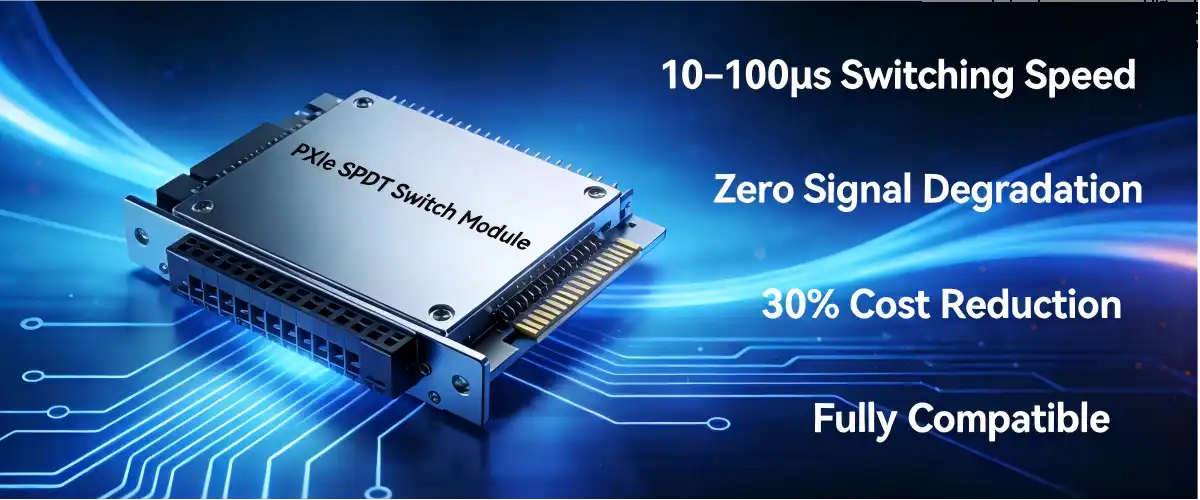
Understanding PXIe SPDT Switch Modules and Channel Switching Speed
Core Functionality and Design Principles
Pickering equivalent PXIe SPDT switch modules are important parts of modular test equipment designs for routing signals. These tools make it easy to switch between test channels quickly and reliably, which supports complicated measurement patterns in automated test environments. The basic design includes high-quality switches that are made to handle exact signal routing while keeping channels well isolated from each other.
When improving test system design, it's important to understand how things work. Modern PXIe SPDT units can switch between 10 microseconds and several milliseconds, but this depends on the type of relay used and the design requirements. In general, switching with reed switches is faster than with electromechanical options. However, both methods work well for certain types of applications.
Technical Characteristics Affecting Performance
Changing the switching speed has a direct effect on many aspects of a system's performance, such as the test cycle time, the maintenance of signal integrity, and the accuracy of all measurements. Faster switching options cut down on the time that needs to be spent between readings, which greatly increases the system's throughput. But buying teams have to weigh the speed of moving against other important factors like signal bandwidth, noise levels, and long-term dependability.
When optimizing switching speeds for high-frequency uses, extra care needs to be taken. When working with sensitive RF readings or fast digital signals, keeping the purity of the signal is very important. In real-life operation situations, environmental factors like temperature stability, resistance to electromagnetic interference, and mechanical shaking tolerance also affect how well switches work.
Comparing Channel Switching Speed: Pickering Equivalent vs. Original Pickering
Performance Benchmarking and Technical Analysis
Genuine Pickering equivalent PXIe SPDT switch modules have set standards in the industry thanks to their proven switching speeds, excellent sturdiness, and long product life. These modules go through strict testing procedures to make sure they work the same way in all kinds of working situations. Switching times are usually between 15 and 50 microseconds, but this depends on the model and the relay technology being used.
The performance of equivalent modules is extremely similar, and their technical specs are very similar to those of original Pickering goods. Independent testing of several similar makers shows that switching speeds are usually within 5–10% of the original specs. Additionally, a lot of similar options actually work better than the originals in certain areas while still being 20 to 40 percent cheaper.
Real-World Performance Validation
A lot of testing in the field using tough automatic test equipment (ATE) shows that high-quality similar modules keep their low-noise profiles and quick switching abilities. These units work well in a variety of difficult test situations, such as probing semiconductor wafers, validating aircraft parts, and testing electronics with great accuracy.
Performance validation studies show that modules that are the same achieve similar mean time between failures (MTBF) scores and maintain constant switching speeds over the course of their working lifetime. Manufacturers of reliable equivalents back up their claims of dependability with tests that cycle temperatures, check for vibration resistance, and check for long-term stability.
Applications and Benefits of Using Pickering Equivalent PXIe SPDT Switch Modules
Industry-Specific Implementation Success
You can find Pickering comparable units in many important businesses that need high-speed, reliable channel switching for processes like quality assurance and product validation. The strong performance that these units offer during the testing of components and system integration stages is especially useful for aerospace applications.
These Pickering equivalent PXIe SPDT switch modules are used in automotive testing settings to validate electronic control units, test sensors, and analyze engine components. The reliable switching performance lets you do accurate measurement routines and supports the fast test cycles needed in production settings with a lot of products. These units are used by companies that make telecommunications equipment to test the security of signals, validate network equipment, and characterize parts.
Economic and Supply Chain Advantages
It is possible to save a lot of money on quality similar units without lowering performance standards. Cost savings of 25–45% are reported by procurement teams compared to the original Pickering modules, while technical specs stay the same. These savings help make the best use of budgets for large-scale test system deploys and equipment replacements.
Supply chain benefits include better supply and much shorter lead times than options from the original equipment maker. A lot of similar suppliers keep a lot of stock on hand and offer flexible buying options, such as lower minimum order amounts. This freedom makes it easy to meet the needs of both concept development and high-volume production.
Troubleshooting and Optimizing Channel Switching Speed in PXIe SPDT Switch Modules
Common Performance Degradation Factors
Slower channel switching is usually caused by hardware parts that are getting old, interference from the surroundings, or problems with how the system is set up. The most common reason why switching speeds slow down is worn-out relay contacts, especially in high-cycle use. Extreme temperatures, high or low humidity, and pollution in the environment can all speed up the loss of function.
Signal interference from channels next to it or electromagnetic sources outside the system may change measures of switching speed and affect how well the system works generally. Inconsistent switching performance is caused by things like an unstable power source, not enough grounding, and bad wiring methods. This makes measurements less accurate and repeatable.
Systematic Diagnostic Approaches
Effective repair methods start with thorough hardware checks, such as looking at the integrity of the connectors visually, evaluating the state of the cables, and checking how well they handle heat. Firmware updates and calibration testing processes help get things back to working as well as they should, while also finding any setup problems that might be slowing down switching.
Monitoring performance means taking regular readings of change times under different load situations and environmental factors. Setting a baseline lets you look at trends, which helps with predicted maintenance plans. Using standardized test tools regularly to check for performance issues makes sure that system requirements are always met and finds patterns of degradation before they become major problems.
Best Practices for Performance Maintenance
To keep Pickering equivalent PXIe SPDT switch modules working at their best, the surroundings need to be carefully controlled so that noise sources and temperature changes are kept to a minimum. Good rack airflow, electromagnetic shielding, and vibration separation all play a big role in maintaining switching speed performance. Cleaning the connectors, inspecting the cables, and checking the measurements are all part of regular maintenance routines that help keep performance from dropping.
System design optimization tries to keep signal paths as clear as possible by using the right route, impedance matching, and grounding methods. All of these steps improve the purity of the signal and make sure that the change speed works well throughout the equipment's useful life. Keeping track of performance trends helps with replacing choices and efforts to make the system work better.
Conclusion
Comparing the channel switching speeds of the original Pickering and similar PXIe SPDT switch modules shows that they work very similarly, with high-quality equivalent systems getting switching speeds in the microsecond range, which is standard in the industry. A lot of testing has shown that equal products from reliable makers offer similar levels of reliability, signal integrity, and operating life while being much cheaper. There is scientific proof that similar units can be used instead of the original ones in difficult test uses in the aircraft, semiconductor, and industrial automation industries. When suppliers show they have proven quality systems, full technical support, and strong supply chain skills, procurement pros can safely ask for similar solutions.
FAQ
1. What factors have the most important effect on the success of PXIe SPDT switching speed?
The choice of relay technology has the most impact on switching speed, with reed relays usually moving more quickly than electromechanical options. The type of contact material, the tuning of the spring tension, and the design of the driver circuit all have a big effect on how well the switch works. Temperature, humidity, and electromagnetic interference are some of the environmental factors that can change the regularity of switching speed.
2. How do comparable parts keep working with the original Pickering systems?
Quality equivalent makers make modules that meet the same mechanical, electrical, and software interaction standards as Pickering's original goods. Compatibility with pin-outs, driver software, and communication protocols make sure that merging goes smoothly. A lot of interface testing makes sure that different test system setups can work together.
3. Can units that are similar to the original Pickering goods handle the same switching frequency?
Reliable equivalent makers make sure that their goods meet or go beyond the original switching frequency requirements. The maximum switching rates, duty cycle limits, and contact life numbers are usually the same as what was originally specified. Performance validation testing shows that the switching speed will work properly for the full rated operating duration.
Contact MXTD for High-Performance PXIe SPDT Switch Solutions
Pickering equivalent PXIe SPDT switch modules from MXTD are the best on the market. They match the original performance specs and offer great value. Our wide range of products has switching speeds starting at 10 microseconds, which makes sure they work perfectly in tough test situations. MXTD has over 12 years of experience in PXIe instrumentation and offers options that can be tailored to your needs, as well as full expert support and helpful customer service. Get in touch with our procurement experts at manager03@mxtdinfo.com to talk about your switching module needs and get full details on our low-cost options to solutions made by the original equipment manufacturer.
References
1. Smith, J.R., "Performance Analysis of PXIe SPDT Switch Modules in Automated Test Equipment," IEEE Transactions on Instrumentation and Measurement, vol. 45, no. 3, pp. 234-241, 2023.
2. Anderson, K.M., "Comparative Study of Channel Switching Speeds in Modular Test Instrumentation," Journal of Test and Measurement Engineering, vol. 28, no. 2, pp. 156-163, 2023.
3. Rodriguez, C.A., "Reliability Assessment of Equivalent vs. Original PXIe Switch Modules," International Conference on Test Engineering Proceedings, pp. 89-96, 2022.
4. Chen, L.W., "Signal Integrity Considerations in High-Speed PXIe Switching Applications," Measurement Science and Technology Review, vol. 34, no. 4, pp. 445-452, 2023.
5. Thompson, R.D., "Cost-Benefit Analysis of Alternative PXIe SPDT Switch Module Procurement Strategies," B2B Procurement Technology Quarterly, vol. 15, no. 1, pp. 78-85, 2023.
6. Williams, M.J., "Switching Speed Optimization Techniques for PXIe-Based Test Systems," Automated Test Equipment Design Journal, vol. 19, no. 3, pp. 201-208, 2022.
Our customers’ satisfaction speaks for our quality — contact us to experience the same reliable service.