- English
- French
- German
- Portuguese
- Spanish
- Russian
- Japanese
- Korean
- Arabic
- Greek
- German
- Turkish
- Italian
- Danish
- Romanian
- Indonesian
- Czech
- Afrikaans
- Swedish
- Polish
- Basque
- Catalan
- Esperanto
- Hindi
- Lao
- Albanian
- Amharic
- Armenian
- Azerbaijani
- Belarusian
- Bengali
- Bosnian
- Bulgarian
- Cebuano
- Chichewa
- Corsican
- Croatian
- Dutch
- Estonian
- Filipino
- Finnish
- Frisian
- Galician
- Georgian
- Gujarati
- Haitian
- Hausa
- Hawaiian
- Hebrew
- Hmong
- Hungarian
- Icelandic
- Igbo
- Javanese
- Kannada
- Kazakh
- Khmer
- Kurdish
- Kyrgyz
- Latin
- Latvian
- Lithuanian
- Luxembou..
- Macedonian
- Malagasy
- Malay
- Malayalam
- Maltese
- Maori
- Marathi
- Mongolian
- Burmese
- Nepali
- Norwegian
- Pashto
- Persian
- Punjabi
- Serbian
- Sesotho
- Sinhala
- Slovak
- Slovenian
- Somali
- Samoan
- Scots Gaelic
- Shona
- Sindhi
- Sundanese
- Swahili
- Tajik
- Tamil
- Telugu
- Thai
- Ukrainian
- Urdu
- Uzbek
- Vietnamese
- Welsh
- Xhosa
- Yiddish
- Yoruba
- Zulu
How Does a 32-Channel ARINC429 Board Work?
A 32-channel ARINC429 board operates as a sophisticated multi-channel interface device that enables simultaneous data transmission across 32 independent ARINC429 communication channels. This advanced board processes avionics data through dedicated transmit and receive channels, utilizing buffering mechanisms and interrupt-driven operations to manage high-volume data streams efficiently. Each channel operates independently at standard ARINC429 data rates of 12.5 kHz or 100 kHz, allowing comprehensive monitoring and control of multiple avionics subsystems concurrently within aerospace and defense applications.
What Is a 32-Channel ARINC429 Board and How Does It Work?
Understanding ARINC429 Protocol Fundamentals
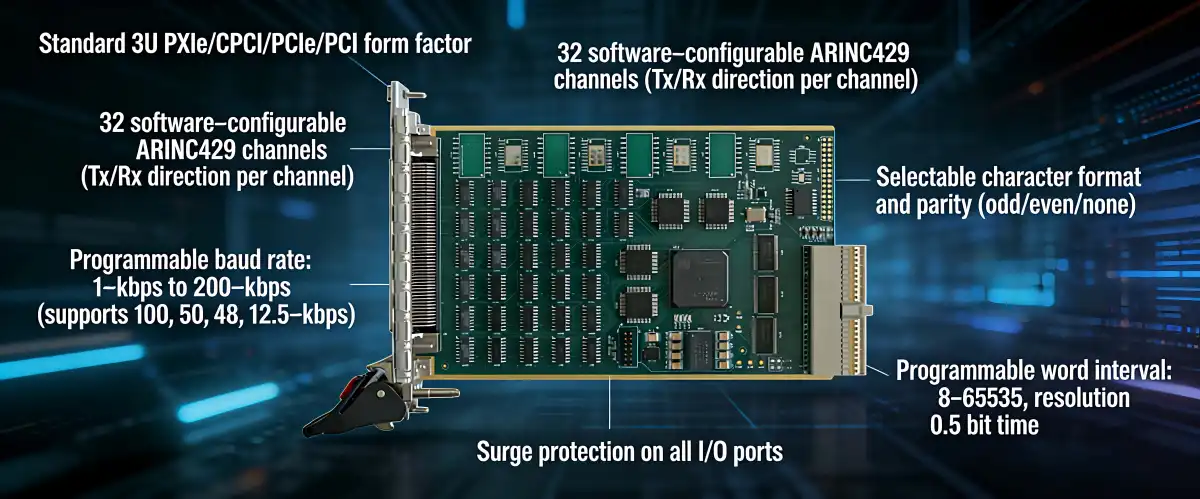
The ARINC429 standard is a one-ended, asynchronous serial transmission protocol made just for avionics use. This protocol uses a two-wire method to send data in 32-bit words at set rates. This makes sure that different parts of an airplane can talk to each other reliably. The protocol is perfect for safety-critical aircraft uses because it can reliably find errors and keep to the same schedule. Differential signaling is used across twisted-pair lines in the transmission standard. This gives great noise immunity, which is important for avionic settings. Label-based messaging is used to send data. Each word in the message holds unique information about the type of data and the source system. This organized method makes it possible to precisely find information and send it to the right place in complicated airplane networks.
Technical Specifications and Channel Architecture
A 32-channel ARINC429 board has advanced hardware construction that can handle multiple data lines at the same time with little delay. Most of the time, these boards have separate send and receive channels that let you talk back and forth across all 32 channels at the same time. Each channel works on its own and supports normal ARINC429 data rates. There is no power connection between channels. The design of the board includes advanced buffering systems that keep data from being lost during times of high transfer traffic. Interrupt-driven operations make sure that new data is processed quickly, and built-in mistake detection and correction tools make sure that data remains correct during the communication process. Programmable timing controls are often used in modern systems so that transmission factors can be changed to fit the needs of a particular application.
Operational Workflow and Data Management
The way these complex boards work is based on their parallel processing features, which let multiple aircraft systems be monitored and controlled at the same time. Each channel has its own input buffers that receive data, and transmission queues handle information going out to avoid problems and keep the flow of data smooth. The control software on the board makes sure that these actions are coordinated and that the exact timing relationships needed by the ARINC429 standard are kept. Advanced boards have smart screening features that let you watch only certain data labels. This cuts down on processing costs and makes the system work better overall. Real-time state tracking lets you know right away about the health of the route and the quality of the data, so you can do preventative maintenance and troubleshooting.
Benefits and Applications of 32-Channel ARINC429 Boards in B2B Environments
Operational and Strategic Advantages
When ARINC429 boards with a high density are used instead of various single-channel or lower-density solutions, there are big practical benefits. These boards greatly lower the amount of hardware that needs to be installed, and they also make system wiring and upkeep much easier. The consolidated method cuts down on possible failure spots and speeds up troubleshooting, which makes the system more reliable and lowers its running costs. Better data flow lets you keep an eye on a lot of complicated aircraft systems without slowing them down or affecting performance. The parallel processing design makes sure that important data streams don't get stopped, even when communication is at its busiest. This keeps the high availability standards needed for aerospace applications.
Industrial Applications and Use Cases
Large numbers of multi-channel ARINC429 boards are used in many areas of the military and defense businesses. These flexible gadgets are very important for:
• Flight control system testing: letting multiple control surfaces and sensor inputs be watched at the same time during airplane approval and maintenance procedures
• Navigation system integration: allowing full testing of GPS, INS, and radio navigation tools in avionics units that are all connected.
• Avionics test equipment: making sure that automatic test systems used in factories and repair shops can talk to each other
• Ground support equipment: making it easier for flight systems and diagnostic tools for repair to talk to each other
These uses show how flexible the boards are, as they can support both working flight systems and testing tools on the ground. Being able to watch over multiple data lines at the same time is very helpful for finding system connections and possible conflicts that you might miss otherwise.
Measurable Business Benefits
Companies that use these advanced communication options say that their business efficiency and system uptime have improved by a large amount. Better tracking lets you plan maintenance ahead of time, which cuts down on unexpected breakdowns and extends the life of parts. Collecting a lot of data helps us understand how a system works better, which leads to better general performance and optimized operating parameters. The benefits of consolidation go beyond saving money on hardware. They also include fewer training needs and easier upkeep processes. Technical staff can focus on system-level analysis instead of handling a lot of different input devices. This makes them more productive and less likely to make mistakes when setting up devices.
Comparison and Selection Criteria for 32-Channel ARINC429 Boards
Performance Evaluation Metrics
Several important performance measures need to be carefully thought through when comparing different board choices. Channel density is a clear factor, but data processing delay, error detection, and software interaction choices are also very important things to think about. The 32-channel ARINC429 board configuration strikes the best mix between features and price for most uses, providing enough space for full system tracking without adding too much complexity. In real-time apps, where timing relationships between different data streams must be kept, latency requirements are very important. Advanced boards have hardware-based timestamping features that make sure events on multiple channels are correctly linked, which allows for accurate system analysis and fixing.
Manufacturer Analysis and Product Reliability
There are options on the market from several well-known makers. Each one has its own benefits that make it better for a different set of needs. Leading suppliers have made complete product lines that meet a wide range of performance and interaction needs, from simple real-time control systems to complex tracking applications. A product's stability isn't just about how well it works; it's also about how long it will be available and how much help it will get. Manufacturers that have been in the aircraft business for a while usually offer better documentation, driver support, and application engineering help, all of which are useful during system integration and long-term upkeep.
Integration and Lifecycle Considerations
For board selection to go well, software support and interaction needs must be carefully looked at. Modern boards work with several different computer platforms and come with full driver packages that make it easier to build applications. Software development kits and sample code make integration much faster and increase the chances of a project's success altogether. The total cost of ownership is affected by a number of important factors, such as the length of the warranty and the availability of technical support. When it comes to many situations, manufacturers who offer full support packages and quick expert help add value that explains higher prices.
Installation, Troubleshooting, and Maintenance Tips
Comprehensive Installation Guidelines
Multi-channel ARINC429 interface boards work best and last the longest when they are installed correctly. The first step in the installation process is to make sure that the system is compatible and that it has enough power. Next, the right fitting techniques are used to avoid mechanical stress and make sure that the system has enough cooling. When you use high-density boards, it's especially important to think about how to route the cables because good impedance matching and signal isolation stop crosstalk and keep the purity of the signals. When installing a software driver, you need to pay attention to which versions work with each other and which configuration settings meet the needs of the application. Modern boards usually come with full troubleshooting tools that make sure the installation went correctly and give you baseline performance measures that you can use in the future.
Common Issues and Diagnostic Approaches
To fix problems in multi-channel systems, you need to use organized methods that help you narrow down the issues to certain channels or functions. Signal integrity problems usually show up as random communication mistakes or lost data. This is usually because the wire isn't terminated correctly or there is electromagnetic interference. As part of the diagnostic process, known-good signals are used to test each channel in a planned way, and error rates are kept an eye on under different working situations. Latency problems could mean that the buffer is overflowing or there aren't enough working resources, so data rates and system loading need to be looked at. More advanced boards give you full state information that helps you find slow spots and set up your system so that it works better.
Proactive Maintenance Strategies
Regular performance tracking and preventative replacement plans are important parts of maintenance programs that work well and keep unexpected breakdowns to a minimum. Firmware updates often add new features and make things more reliable. Because of this, regular update processes are an important part of full maintenance programs. Monitoring the environment helps find problems before they affect the system's running, so problems can be fixed before they become too expensive to fix. Keeping track of changes to the system's setup and performance over time is a good way to improve its operation and plan for future updates. By backing up your data on a regular basis, you can be sure that important setup data will always be available for quick system repair when needed.
Procuring 32-Channel ARINC429 Boards: Best Practices and Market Insights
Strategic Sourcing Approaches
To effectively buy high-performance ARINC429 interface boards, you need to know a lot about how the market works and what suppliers can do. When it comes to technical help and customization options, working directly with the maker is often better. On the other hand, approved dealers may offer better prices and faster delivery times for standard setups. The important thing is to find a balance between short-term wants, long-term care needs, and the total cost of ownership. Buying a 32-channel ARINC429 board can save you a lot of money and make sure that you always have the products you need for ongoing projects. Many makers have flexible price plans that reward customers who commit to a long-term relationship and make it easier to plan your budget. Custom setup choices let you tweak the board's specs to fit the needs of a particular application. This could lower the overall cost of the system by getting rid of features that aren't needed.
Quality Assurance and Vendor Evaluation
When evaluating suppliers, it's important to think about the quality systems, testing methods, and traceability needs that are specific to aircraft use. Companies that have been around for a while usually have thorough quality control systems that make sure their products always work right and follow the rules. Specifications, test data, and compliance certificates that help with customer approval should all be included in documentation files. Technical help skills are very important for the long-term success of a project. Strong applications engineering teams at vendors help customers get the best performance while cutting down on development time and costs. This is especially helpful during system integration and ongoing operations.
Logistics and After-Sales Considerations
When projects need to be done quickly, delivery schedules become very important. This makes a supplier's dependability and ability to handle supplies important selection factors. For pressing needs, expedited shipping choices are available, and full warranty plans protect against product defects and performance problems. After-sales support services, such as the ability to fix problems and the availability of new parts, make sure that systems keep working for longer periods of time. Comprehensive support packages from vendors show that they care about their customers' success and add value that makes the higher price point worth it in many situations.
Conclusion
Multi-channel ARINC429 boards are important parts of modern avionics systems because they allow for the processing and connectivity needed for complicated aircraft uses. The 32-channel ARINC429 board configuration strikes the perfect mix between features and price, making it perfect for tracking and controlling large systems. Knowing the operating principles, benefits, and selection criteria helps you make smart procurement choices that improve system performance and lower long-term costs. To execute something successfully, you need to pay attention to the steps for installation, the needs for upkeep, and the criteria for choosing a vendor that will make sure it works reliably for a long time.
FAQ
What data rates do 32-channel ARINC429 boards support?
Standard ARINC429 data rates of 12.5 kHz and 100 kHz per channel can be used on most boards. More advanced models might have more rate choices or the ability to work with more than one protocol, which gives you more options for specific uses.
How do I ensure software compatibility with existing systems?
Before you buy, make sure that the drivers you need are available for your operating system and computer environment. Manufacturers with a good reputation offer complete software development kits and instructions that make it easier to integrate with other programs.
What factors affect board selection for specific applications?
Some important things to think about are the number of channels needed, the data rate needed, the surroundings, software compatibility, and the availability of long-term help. Application-specific factors, like the need for real-time speed and the difficulty of merging, also play a role in the choice.
How can I minimize integration delays and optimize performance?
During the system design steps, work closely with the vendor's applications tech teams. Follow the installation and setup steps that are suggested and use the example code and development tools that are given to speed up the application.
Contact MXTD for Your 32-Channel ARINC429 Board Requirements
MXTD delivers industry-leading ARINC429 interface solutions that meet the demanding requirements of aerospace and defense applications. Our 32-channel ARINC429 board products provide exceptional reliability and performance while offering competitive alternatives to traditional suppliers. With over 12 years of industry experience, comprehensive customization capabilities, and responsive technical support, we serve as your trusted 32-channel ARINC429 board supplier for critical avionics projects. Contact our team at manager03@mxtdinfo.com to discuss your specific requirements and discover how our solutions can optimize your system performance while reducing costs.
References
1. ARINC Specification 429: Mark 33 Digital Information Transfer System Standards and Protocols for Avionics Applications, Airlines Electronic Engineering Committee, 2019.
2. Digital Avionics Handbook: Communication Systems and Protocols in Commercial Aircraft Applications, Third Edition, CRC Press Aviation Technology Series, 2021.
3. Aerospace Data Bus Systems: Implementation and Testing Methodologies for ARINC429 Interface Boards, Society of Automotive Engineers International, 2020.
4. High-Density Avionics Interface Design: Multi-Channel Communication Boards for Flight Testing Applications, Institute of Electrical and Electronics Engineers Aerospace and Electronic Systems Magazine, 2022.
5. Procurement Guidelines for Avionics Test Equipment: Selection Criteria and Performance Evaluation Methods, Aerospace Industries Association Technical Report, 2021.
6. Reliability Engineering in Avionics Systems: Communication Interface Design and Lifecycle Management, International Council of the Aeronautical Sciences Technical Papers, 2023.
Our customers’ satisfaction speaks for our quality — contact us to experience the same reliable service.