- English
- French
- German
- Portuguese
- Spanish
- Russian
- Japanese
- Korean
- Arabic
- Greek
- German
- Turkish
- Italian
- Danish
- Romanian
- Indonesian
- Czech
- Afrikaans
- Swedish
- Polish
- Basque
- Catalan
- Esperanto
- Hindi
- Lao
- Albanian
- Amharic
- Armenian
- Azerbaijani
- Belarusian
- Bengali
- Bosnian
- Bulgarian
- Cebuano
- Chichewa
- Corsican
- Croatian
- Dutch
- Estonian
- Filipino
- Finnish
- Frisian
- Galician
- Georgian
- Gujarati
- Haitian
- Hausa
- Hawaiian
- Hebrew
- Hmong
- Hungarian
- Icelandic
- Igbo
- Javanese
- Kannada
- Kazakh
- Khmer
- Kurdish
- Kyrgyz
- Latin
- Latvian
- Lithuanian
- Luxembou..
- Macedonian
- Malagasy
- Malay
- Malayalam
- Maltese
- Maori
- Marathi
- Mongolian
- Burmese
- Nepali
- Norwegian
- Pashto
- Persian
- Punjabi
- Serbian
- Sesotho
- Sinhala
- Slovak
- Slovenian
- Somali
- Samoan
- Scots Gaelic
- Shona
- Sindhi
- Sundanese
- Swahili
- Tajik
- Tamil
- Telugu
- Thai
- Ukrainian
- Urdu
- Uzbek
- Vietnamese
- Welsh
- Xhosa
- Yiddish
- Yoruba
- Zulu
How Accurate Is UTi384H Thermal Imager for Temperature Analysis?
When you need to measure temperatures accurately for a workplace inspection, it's not just a requirement; it's the key to safety and speed on the job. With its 384x288 VOx infrared thermal detector, the UTi384H Thermal Imager can reliably measure temperatures and give results that are accurate to within ±2% over a huge range of -30°C to 650°C. High-resolution infrared sensing and tried-and-true calibration standards are used in this professional thermal imaging device to meet the high performance needs of industrial robotics, aircraft, electronics testing, and research. This thermal camera is reliable in the real world because it uses vanadium oxide uncooled detector technology and a lot of weather compensation features that keep results constant even when conditions are tough in the field.
Understanding Thermal Imaging Accuracy: What Makes This Device Stand Out?
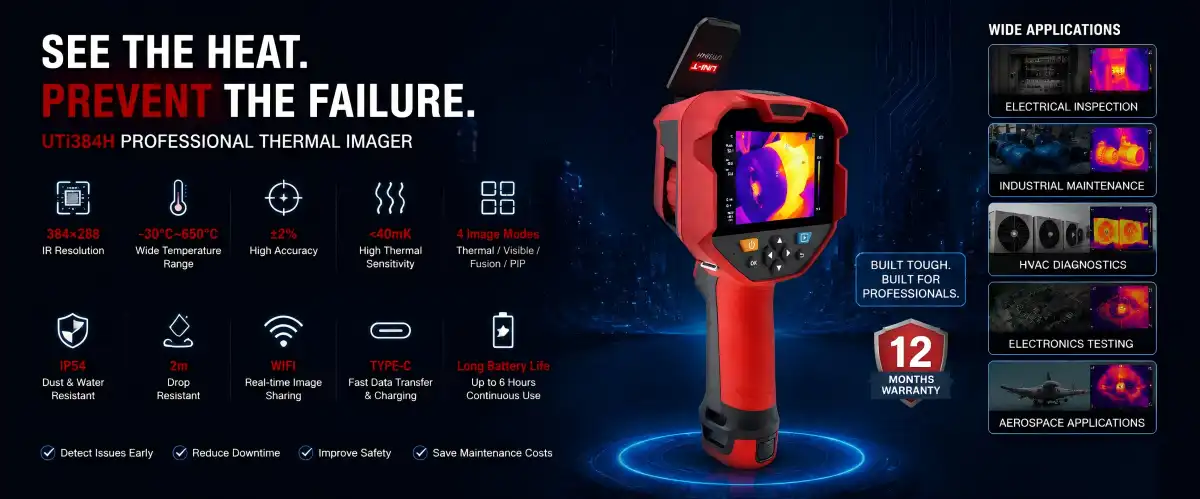
The accuracy of thermal imaging rests on a lot of interconnected factors that procurement workers need to carefully look at. The device's ability to pick up on small changes in temperature is directly affected by the precision of the sensor. More pixels mean clearer thermal definition and more accurate problem identification. While calibration standards make sure that measurements stay the same over time, external factors such as temperature, humidity, and goal emissivity can change the accuracy of thermal data.
Core Technical Specifications Driving Measurement Precision
The 384x288 infrared resolution gives each picture 110,592 separate measurement points, which can pick up temperature differences that devices with smaller resolutions might miss completely. This pixel resolution lets system planners and test engineers find thermal problems earlier, which keeps expensive equipment from breaking down. The large temperature range, from -30℃ to 650℃, makes it useful for a variety of industrial tasks, such as keeping an eye on cold storage facilities and checking high-temperature mechanical parts without the need for multiple specialized tools.
This heat testing tool is accurate to within ±2%, which puts it on par with established industry standards. Similar FLIR types usually have about the same accuracy scores, but they cost a lot more. In order to keep prices down, Seek Thermal devices sometimes give up either precision or temperature range. At the suggested measuring distance of one meter, the manual focus 13mm lens balances field of view with thermal sensitivity to get the most accurate measurements.
Calibration and Environmental Compensation Features
The accuracy of thermal measurements goes beyond the specs of the monitor itself. The device has emissivity options that can be changed. Emissivity is a key feature that describes how different materials give off infrared energy. Users can set emissivity values to match specific target surfaces. This makes measurements much more accurate on a wide range of materials, from painted surfaces to metals that have rusted. Ambient temperature and humidity compensation features change data based on the weather, so the device works the same way in all kinds of inspection settings.
Changes in the environment cause big problems in industry areas in the UTi384H Thermal Imager. Differences in temperature between the monitor and the air around it can cause measurements to drift. When infrared waves travel through air, humidity can change how well they work, especially at longer distances. This temperature diagnostic tool takes care of these issues by changing environmental parameters in real time. This way, R&D managers and technical leaders can be sure they get accurate data no matter what the site conditions are.
How Does Advanced Infrared Technology Ensure Reliable Temperature Analysis?
The technology behind this heat measurement method is based on uncooled vanadium oxide detectors. VOx sensors work steadily because they are solid-state, unlike cooling devices that need upkeep in a cryogenic environment. When infrared light hits the monitor, it changes the electrical resistance. Electronic circuits then use this change to get accurate temperature readings. This microbolometer array design is very sensitive to temperature and doesn't have any moving parts that could make it less reliable when it's used in the field.
Image Processing Algorithms and Auto-Calibration Mechanisms
Before getting to your screen, raw temperature data goes through a lot of complex processing. Private methods fix the fact that the detector array isn't all the same, making up for small differences in how sensitive each pixel is. This uniformity correction happens immediately during operation, so the quality of the picture is kept up without any help from the user. Bad pixel correction finds and fixes any detector parts that don't work as expected, making sure that the measurements are correct across the whole picture.
There are four image output modes: thermal, visual, fusion, and picture-in-picture. These modes give you options for different types of research. The thermal-only mode makes temperature gradients easier to see. The 5MP autofocus camera is used for context-sensitive documentation in visible light mode. Fusion mode adds thermal data on top of pictures that can be seen. This helps maintenance teams connect trends in temperature with parts of the equipment. Picture-in-picture shows a thermal window inside a visible image frame. This gives you a sense of space while keeping thermal information in important places.
Operational Best Practices for Maximum Measurement Accuracy
To get the accuracy that is advertised, even high-tech thermal imaging equipment needs to be handled correctly. Keeping the suggested standoff distance of one meter strikes a good mix between field coverage and spatial clarity. When you get closer, the thermal resolution is better, but the total area is smaller. When you get farther away, you lose information. Test engineers can make inspection methods work better for certain uses when they understand this link.
Target position has a big effect on how accurate measurements are. When infrared energy is reflected at an angle, it looks different, which could lead to mistakes. Angle effects are kept to a minimum by placing the thermal camera perpendicular to the target objects as much as possible. Being aware of reflected energy sources stops you from getting wrong temperature readings when checking shiny surfaces like polished metal.
Allowing the device to stabilize its temperature after going from one setting to another makes sure that it always works the same way. Rapid changes in temperature can make sensors briefly less useful. After going into a new thermal setting, waiting a few minutes lets the internal compensation systems fully change, which keeps the accuracy standard of ±2%. During this stabilization time, the IP54 grade protects internal parts from dust and water, even in harsh industrial environments.
Real-World Applications and Case Studies Validating Performance Reliability
When it comes to inspecting industrial electrical systems, thermal imaging accuracy has a direct effect on safety and uptime. Technicians used this thermal diagnostic tool to check the links between transformers, motor control centers, and distribution panels at a medium-sized manufacturing site as part of regular preventative maintenance. The 384x288 clarity showed that the temperature at a breaker link had gone up by 15°C, which was not normal and would quickly become a catastrophic failure within weeks.
Electrical Inspection Success in Semiconductor Manufacturing
A company that makes semiconductors used this device to set up heat inspection routines for their clean room's electrical system. High clarity and accuracy within ±2% made it possible to find micro-arcing at wire terminations early on, which lower-specification thermal cameras couldn't see. Procurement managers liked the WiFi connection feature because it let remote tech teams see live images and make decisions right away without breaking clean room rules. Within six months of implementation, the building saw a 23% drop in unplanned power outages.
HVAC System Diagnostics in Aerospace Component Testing
An aircraft testing lab needed to accurately measure the temperature of environmental rooms that were used to test and qualify parts. The large temperature range of -30℃ to 650℃ was very important for testing the operation of both the cold and high-temperature chambers. Test engineers used the rectangular area temperature analysis tool to make sure that the temperature was the same across all test units, which was required by aircraft qualification standards. Point, line, circle, and rectangular analysis were all used to get quantitative data that could never be gotten from eye review alone.
The high and low temperature alarms could be set to different levels, which allowed for constant monitoring during long test runs. When chamber temperatures strayed outside of the acceptable range, operators were immediately notified by LED and screen prompts, so the test item wasn't exposed to conditions that would invalidate its approval. By cutting down on test fails and repeat runs, this proactive tracking feature gave a clear return on investment (ROI).
Mechanical Equipment Monitoring in Industrial Automation
A company that specializes in automatic production lines added thermal inspection to programs that plan preventative repair for rotating equipment. Monitoring the temperature of bearings on conveyor drives, robotic controllers, and packing machines showed that failures were starting to happen weeks before vibration analysis showed problems. The ability to withstand a 2-meter drop and the tough design were very useful in production settings where equipment is often hit and handled roughly.
Temperature trending analysis, made possible by WiFi transfer to PC analysis tools, showed that temperatures were slowly rising, which means the lubricant was breaking down. Instead of waiting for major failures to happen, maintenance teams planned specific fixes to happen during planned downtime. The facility saw a 40% drop in production interruptions caused by repair, along with gains in metrics that measure how well the equipment works overall.
Performance Comparison: Evaluating Competitive Thermal Imaging Solutions
When making decisions about what to buy, it helps to compare them objectively to well-known market options. The FLIR E8-XT has a similar 320x240 resolution and temperature range, but it costs a lot more than other options, which can be hard to justify on a budget. The UTi384H Thermal Imager's higher resolution of 384x288 gives it 1.5 times as many measurement points, which means that thermal pictures will show more fine detail, which is important for finding problems quickly.
Technical Specification Analysis Against Market Leaders
Seek Thermal CompactPRO is portable because it works with smartphones, but it doesn't have the stand-alone features that are needed in industrial settings. The 320x240 resolution and -40°C to 330°C temperature range make it hard to use for a variety of purposes. When R&D managers look at long-term investments in testing tools, they know that purpose-built thermal cameras are more durable and better at measuring things than consumer-focused smartphone devices.
The device does well when compared to other products in the same family. UTi160 models that are less expensive have a resolution of 160x120, which is good for basic thermal scans but not precise enough for important industry uses. The large increase in the number of pixels to 384x288 resolution is more than just a small gain; it adds important functionality. The more expensive types come with extras like lenses that can be switched out, but the basic 13mm fixed lens configuration works perfectly for many commercial uses.
When batteries are deployed in the field, their performance should be taken into account. The continuous running time of about five hours lets a full shift do checks without stopping to recharge. Type-C charging compatibility makes operations easier because the same cables can be used to move data and charge devices. This means that mobile inspection teams don't need as many extra accessories.
Procurement Considerations: Making Confident Investment Decisions
When buying a B2B thermal camera, it's not just about the technical specs; it's also about how reliable the seller is, how well they handle customer service after the sale, and the total cost of ownership. Authorized distribution outlets make sure that the goods they sell are real and that the warranties they offer are valid. While gray-market sellers may offer good deals, getting technical help and software updates can be hard with devices bought from these sellers.
Authentication and Supplier Verification Strategies
Checking the authenticity of a product saves buying investments and makes sure that specifications are met. Legal thermal image devices that are legal have CE, FCC, UKCA, and RoHS certifications that are easy to see in the papers that come with the device. During the quote process, ask for certification papers and check with makers to see if they can register serial numbers. The one-year manufacturer guarantee is normal in the industry, but make sure you understand the exact terms of coverage, such as how quickly repairs will be done and whether replacement units will be available during service times.
When it comes to buying thermal imaging equipment, MXTD's experience in precise measuring and testing equipment is a good fit. Thermal cameras can measure temperatures without touching them, but for many industrial testing needs, systems that combine thermal data with electrical measurements, environmental tracking, or mechanical testing are needed. We can help with the development of complete measurement solutions because we have experience with PXIe chassis systems, precise connectors, and special testing tools.
Technical leaders who are looking at thermal imaging as part of a larger testing infrastructure should talk to teams that have experience with system interface problems. We have quick response procedures that help procurement teams make smart choices. Usually, we answer technical questions within an hour. Whether you need standard thermal imaging tools or custom measurement solutions that include thermal analysis as part of bigger testing frameworks, getting help from an experienced professional speeds up the project timeline and lowers the risks of implementation.
Support Infrastructure and Long-Term Partnership Value
Infrastructure for after-sales help in the UTi384H Thermal Imager has a big effect on how well operations run. International teams working in different places around the world can get help from technical support staff who speak two languages. Free PC software and mobile apps for sending images in real time and analyzing them afterward make the device more useful without having to pay for software licensing fees on a regular basis. Support for firmware updates makes sure that devices stay up to date with new features and better performance throughout their service life.
Industrial procurement workers prefer sellers who are committed to long-term partnerships over those who are only interested in making sales. Look for signs like responsive technical support during specification development, the ability to customize standard goods when they need to be changed, and clear communication about when large orders will be produced. Our twelve years of experience in the field help us make realistic delivery promises and let you know right away when changes need to be made to the plan.
When sellers of thermal imaging devices get more than ten units, they can usually get bulk order prices. When you buy in bulk, you can get better terms and make sure that all of your sites have the same equipment, which makes training, keeping track of spare parts, and upkeep easier. When you talk about financing choices early on in the buying process, you can find payment structures that work with the way medium- to large-sized businesses usually plan their budgets for capital equipment.
Conclusion
In conclusion: With its ±2% accuracy, 384x288 precision, and measurement range of -30°C to 650°C, this thermal imaging solution is a good choice for tough industrial temperature research tasks. Real-world performance in mechanical tracking, HVAC diagnostics, and electrical checking proves that technical specs are correct by making operations better in a way that can be measured. Competitive analysis shows procurement managers how to place their capabilities and values in a way that balances performance needs with budget limits. Paying attention to the total cost of ownership, supplier verification, and after-sales support infrastructure will help make sure that the deployment goes smoothly and supports long-term goals for predictive maintenance, quality control, and safety in research, aerospace, industrial automation, and electronics testing.
FAQ
1. What temperature accuracy can I expect from the UTi384H in industrial environments?
If you follow the manufacturer's instructions, the device will measure accurately within ±2% of the full -30°C to 650°C range. In real life, this precision standard stays the same as long as the target materials have the right emissivity setup and the suggested standoff distances are kept.
2. How does this thermal camera perform in harsh environmental conditions?
The IP54 grade protects against dust and water splashes, making it ideal for most industrial settings. The 2-meter drop resistance takes care of handling issues that come up during checks in the field. The operating temperature ranges cover most workplace settings inside and mild weather outside.
3. Does the UTi384H compare favorably against FLIR thermal imaging devices?
The 384x288 resolution is better than many similarly priced FLIR models, and the accuracy stays the same at ±2%. When you add up the price of the device, the software that comes with it, and the cost of maintenance, this one often comes out on top. While FLIR's well-known brand name is important, objective review is supported by performance standards.
Partner with MXTD for Comprehensive Industrial Testing Solutions
MXTD offers full system solutions as well as integrated measurement and testing equipment knowledge that goes beyond thermal imaging. We are experts in making high-reliability PXIe chassis, precise testing systems, and unique hardware that meets the specific needs of aircraft, electronics testing, and industrial automation. We have been selling UTi384H Thermal Imagers for a long time and only sell original units. We also offer fast technical help and reasonable prices for both single units and bulk sales.
Our engineering teams work together with procurement managers and system engineers to set up testing solutions that meet the needs of each application, whether they are for standard goods or custom ODM/OEM implementations. Get in touch with us at manager03@mxtdinfo.com to talk about your thermal image needs or to find out how combined testing systems that include thermal analysis can help your quality control and preventative maintenance.
References
1. Bagavathiappan, S., Lahiri, B. B., Saravanan, T., Philip, J., & Jayakumar, T. (2013). Infrared thermography for condition monitoring – A review. Infrared Physics & Technology, 60, 35-55.
2. Meola, C., & Carlomagno, G. M. (2004). Recent advances in the use of infrared thermography. Measurement Science and Technology, 15(9), R27-R58.
3. Vollmer, M., & Möllmann, K. P. (2017). Infrared Thermal Imaging: Fundamentals, Research and Applications (2nd ed.). Wiley-VCH.
4. Usamentiaga, R., Venegas, P., Guerediaga, J., Vega, L., Molleda, J., & Bulnes, F. G. (2014). Infrared thermography for temperature measurement and non-destructive testing. Sensors, 14(7), 12305-12348.
5. Kylili, A., Fokaides, P. A., Christou, P., & Kalogirou, S. A. (2014). Infrared thermography (IRT) applications for building diagnostics: A review. Applied Energy, 134, 531-549.
6. Maldague, X. P. V. (2001). Theory and Practice of Infrared Technology for Nondestructive Testing. Wiley-Interscience.
Our customers’ satisfaction speaks for our quality — contact us to experience the same reliable service.