- English
- French
- German
- Portuguese
- Spanish
- Russian
- Japanese
- Korean
- Arabic
- Greek
- German
- Turkish
- Italian
- Danish
- Romanian
- Indonesian
- Czech
- Afrikaans
- Swedish
- Polish
- Basque
- Catalan
- Esperanto
- Hindi
- Lao
- Albanian
- Amharic
- Armenian
- Azerbaijani
- Belarusian
- Bengali
- Bosnian
- Bulgarian
- Cebuano
- Chichewa
- Corsican
- Croatian
- Dutch
- Estonian
- Filipino
- Finnish
- Frisian
- Galician
- Georgian
- Gujarati
- Haitian
- Hausa
- Hawaiian
- Hebrew
- Hmong
- Hungarian
- Icelandic
- Igbo
- Javanese
- Kannada
- Kazakh
- Khmer
- Kurdish
- Kyrgyz
- Latin
- Latvian
- Lithuanian
- Luxembou..
- Macedonian
- Malagasy
- Malay
- Malayalam
- Maltese
- Maori
- Marathi
- Mongolian
- Burmese
- Nepali
- Norwegian
- Pashto
- Persian
- Punjabi
- Serbian
- Sesotho
- Sinhala
- Slovak
- Slovenian
- Somali
- Samoan
- Scots Gaelic
- Shona
- Sindhi
- Sundanese
- Swahili
- Tajik
- Tamil
- Telugu
- Thai
- Ukrainian
- Urdu
- Uzbek
- Vietnamese
- Welsh
- Xhosa
- Yiddish
- Yoruba
- Zulu
PIL 40-136 Series Relay Module SPST DPST 2 Amp
2. Flexible configuration and on-demand selection
3. Fast operation speed of 250µs typical
4. 12 to 32 power reed relays per module
5. Reference Price: $1895-$2510
The PIL 40-136 series is a high-performance, medium-power general-purpose PXI reed relay module, part of Pickering's Power Ruthenium Reed Relay product line.
PIL 40-136 Series Relay Module SPST DPST 2 Amp designed for applications requiring higher current and voltage carrying capacity than standard reed relay modules, this series offers flexible configurations from 12 to 32 channels within a single 3U PXI slot, balancing switching speed, lifespan, and power handling capabilities.
The 40-136 series fills the market gap between low-power general-purpose reed relays (such as the 40-110/115 series, 1A/150V) and high-power electromechanical relays (such as the 40-160 series, 10A), providing test system engineers with an ideal solution for achieving medium-power signal switching in a compact space. The module uses reed relays with ruthenium sputtered contacts, retaining the inherent advantages of reed relays—fast speed, long lifespan, and excellent low-level performance—while increasing the power handling capacity to 200V/2.5A, making it widely applicable in automotive electronics, industrial control, and communication testing.
The PIL 40-136 series belongs to Pickering's PXI System 40 modular switch product system and is a core member of Pickering's Medium Power General Purpose Switch Modules product line. Within Pickering's product classification system, this series, along with the 40-130 (DPDT EMR), 40-131 (SPDT EMR), 40-132 (DPST/SPST EMR), 40-137 (thermal switch), 40-138 (hybrid configuration), and 40-139A (high-density PXIe) series, forms a complete matrix of medium-power switch solutions, providing users with a comprehensive selection from 0.5A to 5A, from reed switches to electromechanical systems, and from single-pole to multi-pole.
Among all the mid-power options, the 40-136 series features reed relay technology as its core differentiator—offering faster switching speeds (typically 250µs vs 3-10ms), longer low-power lifespans (1 billion cycles vs millions of cycles), superior low-level signal switching performance, and more stable contact resistance characteristics compared to electromechanical relay (EMR) solutions of the same power rating.
The core value of the 40-136 series can be summarized in the following four aspects:
-
A balance between power and performance. Offering up to 32 channels of medium-power switching capability (200V, 2.5A, 40W) in a single 3U PXI slot, while maintaining the fast response and long lifespan of reed relays. For applications requiring both medium power handling and high switching speed and reliability, the 40-136 offers unparalleled cost-effectiveness.
-
Flexible configuration and on-demand selection. The entire series offers six standard models, covering both SPST and DPST contact types, with channel counts ranging from 12 to 32. Users can precisely select the model according to their actual needs, avoiding over-purchasing. Combined with Pickering's flexible manufacturing capabilities, customized configurations are also supported to meet special application requirements.
-
End-to-end ecosystem support. From the hardware modules themselves to the accompanying cable connector solutions (20 connector series, 1200+ products), eBIRST relay fault diagnosis tools, Switch Path Manager signal routing software, multi-platform drivers, and 3-year warranty and 15-20 years of long-term product support, Pickering provides a complete test system development ecosystem, significantly reducing the user's total cost of ownership.
-
Vertically integrated quality assurance. Pickering is the only switch module supplier in the industry with in-house reed relay manufacturing capabilities. All ruthenium sputtered power reed relays used in the 40-136 series are manufactured by Pickering Electronics (the reed relay division of the Pickering Group), employing patented SoftCenter™ technology to ensure consistent relay quality and long-term supply reliability.
The 40-136 series is the reed relay version of Pickering's Medium Power General Purpose Switch Modules product line. In Pickering's product portfolio, general purpose relay modules are categorized by power rating as follows:
-
Low-power/General-purpose type: Such as the 40-110/115/120/125 series, using standard reed relays, maximum switching voltage 150VDC/100VAC, maximum switching current 1A, suitable for low-level signal switching.
-
Medium-power type: Including the 40-130/131/132/136/137/138/139 series, power rating 2-5A, voltage rating 200-300V, suitable for medium-power signal switching. The PIL 40-136 Series Relay Module SPST DPST 2 Amp is the only one using reed relay technology.
-
High-power type: Such as the 40-150/151/160/180/181 series, power rating 5-40A, suitable for high-power load switching.
Within the mid-power product line, the positioning of the PIL 40-136 Series Relay Module SPST DPST 2 Amp can be illustrated by the following table:
|
Product Series |
Relay Type |
Configuration |
Maximum Current |
Maximum Voltage |
Density Characteristics |
|
40-130 |
EMR electromechanical relay |
DPDT |
2A |
220VDC/125VAC |
8/13 CH |
|
40-131 |
EMR electromechanical relay |
SPDT |
2A |
300VDC/250VAC |
16/26/52 CH |
|
40-132 |
EMR electromechanical relay |
SPST/DPST |
2A |
300VDC/250VAC |
16/32/19 CH |
|
40-136 |
Ruthenium reed relay |
SPST/DPST |
2/2.5A |
200VDC |
12/16/25/32/19 CH |
|
40-137 |
EMR thermal switch |
SPST |
2A |
110VDC/250VAC |
32/39 CH |
|
40-138 |
EMR hybrid configuration |
SPST/SPDT/DPST/DPDT |
2A |
300VDC/250VAC |
Hybrid configuration |
|
40-139A |
EMR high density |
SPST/SPDT/DPST/DPDT |
2A |
300VDC/250VAC |
80/52/40/26 CH |
Therefore, the PIL 40-136 Series Relay Module SPST DPST 2 Amp occupies a unique position in the mid-power product line—it is the only mid-power series that utilizes reed relay technology, thus offering significant advantages in switching speed (250µs vs 3-10ms), low-power lifespan (10⁹ vs 10⁷ cycles), and low-level signal performance. For applications requiring mid-power handling capability while prioritizing switching speed and reliability, the 40-136 is the optimal choice.
The 40-136 series has six standard models, divided into two main types: SPST and DPST. The table below summarizes key information for each model, including the complete part number, number of channels, relay type, connector type, maximum current carrying capacity, corresponding eBIRST tool model, and spare relay kit.
|
Part Number |
Configuration |
Relay Type |
No.CH |
Maximum Switching Voltage |
Maximum Switching Current |
Maximum Current Carrying Capacity |
Maximum Power |
Front Panel Connector |
eBIRST Testing Tool |
Spare relay kit |
|
40-136-011 |
16xSPST |
Power Ruthenium Latch |
16 |
200 VDC |
1 A |
2.5 A |
40 W |
50-needle D-type male |
93-005-001 |
91-100-036 |
|
40-136-111 |
25xSPST |
Power Ruthenium Latch |
25 |
200 VDC |
1 A |
2.5 A |
40 W |
50-needle D-type male |
93-005-001 |
91-100-036 |
|
40-136-211 |
32xSPST |
Power Ruthenium Latch |
32 |
200 VDC |
1 A |
2 A |
40 W |
78-pin D-type male |
93-006-001 |
91-100-036 |
|
40-136-012 |
12xDPST |
Power Ruthenium Latch |
12 |
200 VDC |
1 A |
2.5 A |
40 W |
50-needle D-type male |
93-005-001 |
91-100-051 |
|
40-136-112 |
16xDPST |
Power Ruthenium Latch |
16 |
200 VDC |
1 A |
2 A |
40 W |
78-pin D-type male |
93-006-001 |
91-100-051 |
|
40-136-212 |
19xDPST |
Power Ruthenium Latch |
19 |
200 VDC |
1 A |
2 A |
40 W |
78-pin D-type male |
93-006-001 |
91-100-051 |
The PIL 40-136 Series Relay Module SPST DPST 2 Amp has a wide range of applications, covering all the electronics industries served by Pickering:
-
Automotive Electronics Testing: Suitable for automotive ECU function testing, body electronics testing, sensor signal switching, and other scenarios. Its medium power processing capability can meet the signal switching requirements of automotive 12V/24V systems, and ruthenium contacts ensure long-term reliable low-level signal switching.
-
Aerospace and Defense: In fields such as avionics testing, weapon system testing, and satellite ground station testing, high product reliability, long lifespan, and a 15-20 year long-term support commitment are particularly important. The modular nature of the PXI platform also facilitates system upgrades and maintenance.
-
Industrial automation testing: Suitable for functional testing and verification of products such as industrial controllers, PLCs, power modules, and motor drives. Multi-channel configuration can meet the signal routing requirements of complex test systems.
-
Communication equipment testing: In the production testing of communication equipment, fast switching speed helps to improve test throughput, while the long life of reed relays reduces maintenance costs.
-
Medical Electronics Testing: Testing medical devices has stringent requirements for switch reliability and signal integrity. Ruthenium contacts of 40-136 and stable contact resistance meet the needs of such applications.
-
Semiconductor testing: In applications such as semiconductor wafer acceptance testing (WAT) and chip characteristic analysis, the construction of multi-channel switch matrices requires a large number of general-purpose switch modules.
MXTD Supplier / Wholesaler
Capabilities Profile: Xi'an Mingxi Taida Information Technology Co., Ltd. (MXTD)
Who We Are
For over 12 years, MXTD has pioneered the development of high-precision metrology platforms and intelligent automation architectures. We empower global heavy industries and smart factories with mission-critical technical infrastructure. By seamlessly integrating proprietary hardware R&D, secure cross-border supply chains, and expert engineering consultancy, we deliver full-lifecycle operational certainty to our global partners.
Core Technical Portfolio
Leveraging advanced electronic engineering and industrial physics, MXTD engineers and delivers:
- Inspection Systems: Next-generation automated inspection machinery and diagnostic tools.
- High-Speed DAQ Hardware: Ultra-reliable PCIe and PXIe data acquisition and modular cards.
- Precision Assemblies: Custom electronic components built for specialized industrial networks.
Our entire product ecosystem is purpose-built to withstand severe industrial stress. We ensure uninterrupted data continuity and uncompromising mechanical ruggedness in environments that overwhelm standard catalog hardware.
Product Tails- PIL 40-136 Series Relay Module SPST DPST 2 Amp
The Key Technology:
-
Ruthenium sputtered power reed relays. The 40-136 series all utilize ruthenium sputtered contacts in their power reed relays. Compared to traditional gold or rhodium contacts, ruthenium contacts exhibit superior wear resistance and contact resistance stability under medium-power switching conditions, while maintaining excellent low-level signal switching capability. This means that the same module can handle both weak millivolt-level sensor signals and switch power signals up to 200V/1A, significantly expanding the application range of a single module.
-
Built-in spare relay design. Spare reed relay positions are reserved on the module circuit board, making on-site maintenance simple and quick. When a relay fails, technicians can replace it with minimal downtime, eliminating the need for factory repairs. This is especially important for production line test systems that require continuous operation. Pickering provides dedicated spare relay kits (SPST version: 91-100-036; DPST version: 91-100-051) to ensure spare parts availability.
-
eBIRST Diagnostic Support. The entire series supports Pickering's eBIRST (external built-in relay self-test) switch system testing tool. eBIRST uses a four-wire resistance measurement method to detect the resistance value of each signal path, quickly identifying faulty and degraded relays and displaying their specific locations on the module graphically. This feature reduces troubleshooting time, which traditionally takes hours or even days, to minutes, significantly reducing maintenance costs and downtime of the test system.
-
Ultra-fast switching speed. Typical operating time is only 0.5ms (250µs typical operating speed), far faster than electromechanical relays of the same power class (typically 3-10ms). In large-scale test systems, faster switching speeds directly translate to higher test throughput and lower unit test costs. This advantage is particularly significant for applications requiring frequent signal switching.
-
Ultra-long lifespan. Under low-power switching conditions, the expected lifespan is up to 1 billion operations; even under rated high-power conditions, the expected lifespan exceeds 1 million operations. This means that in most application scenarios, the module's lifespan will far exceed the lifespan of the test system itself, significantly reducing maintenance and replacement costs.
Compared with similar products on the market, the differentiated advantages of the 40-136 series are mainly reflected in the following aspects:
-
A vertically integrated relay supply chain. Pickering is the only PXI switch module supplier that manufactures its own reed relays. This vertical integration means stricter quality control, greater flexibility in product customization, and more reliable long-term supply guarantees. Users do not need to worry that changes in relay supplier products will affect module performance or availability.
-
The widest range of configuration options. A single series offers six standard configurations, covering both SPST and DPST formats, with channel counts ranging from 12 to 32. Users can precisely match their needs, avoiding the waste of investment due to insufficient channels or excessive channels. Combined with Pickering's customization capabilities, it can meet virtually any special configuration requirement.
-
A complete software ecosystem. From the underlying kernel drivers and industry-standard IVI/VISA drivers to the upper-level Switch Path Manager signal routing software and eBIRST diagnostic tools, Pickering provides a one-stop software solution. Users do not need to purchase software tools from multiple vendors, nor do they need to worry about compatibility issues. In particular, Switch Path Manager can abstract complex multi-module switching systems into a simple endpoint connection model, significantly reducing the complexity of test software development and maintenance costs.
The introduction of the PIL 40-136 Series Relay Module SPST DPST 2 Amp stems from a key demand in the test and measurement field for medium-power switching modules: in many automated test systems, engineers need to switch signals that include both weak sensor outputs (millivolts/microamps) and drive signals of a certain power (tens of volts/several amps). The traditional solution is to use low-power reed relay modules to handle small signals and high-power electromechanical relay modules to handle high-power signals, which not only increases system cost and space occupation but also increases wiring complexity.
Pickering's 40-136 series is designed to solve this problem. By employing ruthenium sputtered power reed relay technology, a single module can simultaneously cover the switching needs of low-level and medium-power signals. The choice of ruthenium contact material is key—ruthenium has a higher hardness and melting point than gold, can withstand higher switching power with less contact wear, and maintains the inherent advantages of reed relay sealed contacts (no contamination, slow oxidation, and stable contact resistance).
In terms of market positioning, the 40-136 series targets test applications that demand high reliability, fast response, and medium power capability. Typical target customers include automotive electronics manufacturers requiring high-throughput production testing, aerospace test system integrators requiring long lifespan and low maintenance, and industrial automation test teams requiring flexible configuration of multi-channel switches. For these users, the PIL 40-136 Series Relay Module SPST DPST 2 Amp offers a medium-power switch solution that achieves an optimal balance between performance, reliability, and cost.
Functions of The PIL 40-136 Series Relay Module SPST DPST 2 Amp
The core function of the 40-136 series modules is to provide programmable multi-channel signal switches, enabling signal routing between instruments and the device under test (DUT) in the test system. Internally, the module consists of two main parts: control logic circuitry and a relay array. The control logic receives commands from the controller via the PXI backplane and drives the corresponding relay coils; the relay array is responsible for the actual signal switching.
The module adopts a single sub-unit architecture, where all relays are controlled by the same 32-bit wide sub-unit. Users can control each relay individually via bit-wise operations, or set the state of the entire sub-unit at once via pattern write. This architecture is simple and intuitive, easy to program, and suitable for building general-purpose switch arrays and custom routing.
-
SPST Version Architecture
The three SPST versions 40-136-011/111/211 provide 16, 25, and 32 independent single-pole single-throw (SPST) normally open relays, respectively. In the default state (relay unenergized), all signal paths are open. When a specific relay is energized, a conductive signal path is established between the corresponding C terminal (common terminal) and A terminal (normally open terminal).
Each channel in the SPST version is completely independent, with no internal connection limitations. Users can use any channel for any signal, control the on/off state of each channel individually, or close multiple channels simultaneously. This flexibility makes the SPST version ideal for building general-purpose switch arrays, signal distribution networks, and applications requiring independent control of multiple signals.
For example, in a multi-channel data acquisition system, a 40-136-211 (32xSPST) can be used to switch a digital multimeter (DMM) to 32 different test points, enabling time-division multiplexing of multiple test points from a single instrument. Alternatively, in a functional testing system, multiple SPST relays can be used to control the access and disconnection of different test resources.
-
DPST version architecture
The DPST versions 40-136-012/112/212 provide 12, 16, and 19 double-pole single-throw (DPST) normally open relays, respectively. DPST relays have two independent poles, marked ".1" and ".2", which are controlled by the same relay coil and can close or open simultaneously. By default, all signal paths are open. Activating a relay will simultaneously close the C-A path of poles 1 and 2.
The DPST version is particularly suitable for applications that require simultaneous switching of two related signal lines, most typically differential or two-wire signal switching. For example:
Differential Signal Switching: When switching between differential input instruments (such as differential amplifiers and instrumentation DMMs) and differential output sensors or DUTs, both positive and negative signal lines need to be connected simultaneously.
Two-Wire Sensors: Many industrial sensors (such as RTDs and thermocouple cold junction compensation circuits) require two signal lines. DPST relays ensure simultaneous switching of both lines.
Signal Lines and Shielded Lines: DPST provides convenience when both signals and their shields need to be switched simultaneously.
Power and Sensing Lines: In some power testing applications, it is necessary to switch power lines and sensing lines (Kelvin connections) simultaneously.
Each relay in the DPST version has electrically isolated poles that can be used for different signals, as long as they need to be switched simultaneously. This provides system designers with greater wiring flexibility.
The power consumption of the PIL 40-136 Series Relay Module SPST DPST 2 Amp modules mainly comes from the relay coil drive and control logic circuitry. All versions have the same power consumption specifications:
The module's typical power consumption is approximately 2W (5V × 0.4A), and the maximum power consumption is approximately 2.4W (5V × 0.48A). The extremely low power consumption means the module generates little heat during operation, preventing overheating issues even in densely configured PXI chassis, while also reducing the power supply capacity requirements of the chassis.
The operating temperature range is 0°C to +55°C, covering the temperature conditions of most laboratory and industrial environments. For applications in extreme temperature environments, ensure the ambient temperature is within the specified range, or consider using a temperature-controlled enclosure. The module can withstand an even wider temperature range (-20°C to +75°C) during transportation and storage, meaning that no special temperature protection is required during logistics.
The 40-136 series modules have two interface systems: a PXI backplane interface and a front panel signal interface:
-
PXI Backplane Interface: Connects to the PXI chassis backplane via a standard 32-bit P1/J1 backplane connector for receiving power and control signals. The module uses a 33MHz 32-bit PXI bus interface, conforming to PXI specification 2.2. It is important to note that this series of modules does not implement Local Bus, Trigger Bus, and Star Trigger functions; this is a typical configuration for general-purpose switching modules—switching modules typically do not require these advanced timing and synchronization functions.
-
Front panel signal interface: Uses D-type male connector; specific configuration varies depending on the model:
|
Model |
Front Panel Connector |
|
40-136-011 (16xSPST) |
50-pin D-type male connector |
|
40-136-111 (25xSPST) |
50-pin D-type male connector |
|
40-136-211 (32xSPST) |
78-pin D-type male connector |
|
40-136-012 (12xDPST) |
50-pin D-type male connector |
|
40-136-112 (16xDPST) |
78-pin D-type male connector |
|
40-136-212 (19xDPST) |
78-pin D-type male connector |
The 40-136 series offers six standard configurations with channel counts ranging from 12 to 32:
SPST Version (Single Throw):
-
Channel 16: 40-136-011
-
Channel 25: 40-136-111
-
Channel 32: 40-136-211
DPST version (dual swords, single throw):
-
12 channels (24 switch contacts): 40-136-012
-
16 channels (32 switch contacts): 40-136-112
-
19 channels (38 switch contacts): 40-136-212
All models are single-slot 3U PXI modules, maximizing the utilization of different channel numbers within the same package size through flexible PCB layout. For applications requiring higher channel density, consider the 40-139A series PXIe high-density modules (up to 80 SPST channels).
The 40-136 series is compatible with the following chassis types:
-
3U PXI Chassis (all PXI compliant manufacturers' products)
-
3U CompactPCI (cPCI) Chassis
-
Legacy and Hybrid Peripheral Slots in 3U PXI Express (PXIe) Chassis
-
Pickering LXI Modular Chassis (e.g., 60-102B, 60-103B, etc.)
-
Pickering LXI/USB Modular Chassis
This broad compatibility means users can flexibly choose the control platform according to their system architecture requirements, supporting both local PXI control and remote LXI/Ethernet control. In particular, PXIe compatibility protects users' investment—existing 40-136 modules can continue to be used when upgrading to a PXIe platform.
Software User Manual
The PIL 40-136 Series Relay Module SPST DPST 2 Amp offers three levels of drivers to meet the needs of different application scenarios:
Kernel drivers are the lowest-level drivers, directly manipulating hardware registers and providing the highest performance and most complete functional control. They are provided as DLLs and support direct I/O operation function calls. For applications requiring maximum hardware control or pursuing the highest performance, kernel drivers are the best choice. On the Windows platform, kernel drivers provide an interface through PILPXI DLLs, with functions prefixed with PIL_.
Typical function call example (using 40-136-211 as an example):
// c
// Operate relay 1 (close)
PIL_OpBit(card_num, sub_unit, 1, 1);
// Release relay 1 (disconnect).
PIL_OpBit(card_num, sub_unit, 1, 0);
// Write sub-cell mode (set all relays at once)
DWORD data[1] = {0x20}; // 6th position1
PIL_WriteSub(card_num, sub_unit, data);
VISA driver
// c
// Operate on a single channel
pipx40_setChannelState(vi, sub_unit, 1, VI_ON);
// Set channel mode
ViUInt32 data[1] = {1};
pipx40_setChannelPattern(vi, sub_unit, data);
IVI driver
Typical function calls in an IVI driver:
// c
// Connection Channel
pi40iv_Connect(vi, com1, ch1);
// Disconnect channel
pi40iv_Disconnect(vi, com1, ch1);
It should be noted that the IVI Switch driver specification does not support the batch setting (pattern write) function. If you need to operate multiple relays simultaneously to achieve the fastest speed, you should use the VISA driver or the Kernel driver.
Switch Path Manager signal routing software
Switch Path Manager (SPM) is a professional signal routing software developed by Pickering. It abstracts complex switching hardware into a concise programming model based on "paths", which greatly simplifies the software development and maintenance of multi-module switching systems.
-
Automatic Path Calculation: Users only need to define the endpoints to be connected, and SPM automatically calculates the optimal path in the system and operates the corresponding relays. Engineers no longer need to understand the internal structure and detailed wiring of each module.
-
Short Circuit Detection: SPM automatically detects and prevents accidental short circuits, protecting instruments and DUTs from damage.
-
Endpoint Protection: By assigning different types of signals (such as power, ground, and sensitive analog signals) to different protection groups, SPM prevents accidental connections between incompatible signals.
-
Dynamic/Static Routing: Supports both dynamic routing (path calculated on each call) and static routing (predefined paths executed directly at runtime).
-
Manual Control and Debugging: Provides debugging monitoring and manual control functions for easy system debugging and troubleshooting.
-
Multi-Platform Support: Supports all Pickering PXI, PXIe, LXI, and PCI switch modules.
Soft Front Panel
Pickering offers Soft Front Panel (SFP) – a graphical front panel control software – for all its switching modules. SFP allows users to manually control each relay on the module by clicking with a mouse, without writing any code.
The main uses of SFP include:
-
Module verification: Quickly verifying the functionality of a new module upon receipt.
-
System debugging: Manually controlling relays to verify wiring and signal paths during the system debugging phase.
-
Educational demonstrations: Demonstrating the working principle of the switch module in training and demonstration environments.
-
Temporary testing: Some temporary, one-off test operations that are not worth programming.
Other Support Tools
-
Diagnostic Utility: The Pickering PXI diagnostic tool generates a diagnostic report on the system's PCI configuration, lists all installed Pickering switch cards, and highlights potential configuration problems. It's a useful troubleshooting tool when encountering installation or identification issues.
-
CAD 3D Models: All 40-136 series modules provide STEP format 3D model files, available from Pickering's download center. These models facilitate spatial verification during mechanical design and system integration.
-
Cable Design Tool: Pickering offers a free online cable design tool that allows users to customize their desired cable configurations and quickly obtain quotes. For the 40-136 series modules, this tool can be used to design custom 50/78-pin D-type cable assemblies.
Custom OEM/ODM Engineering Services
Tailored for Specialized Operations
Generic hardware often limits specialized engineering potential. MXTD provides high-performance, built-to-order OEM and ODM customization to align hardware precisely with your technical parameters.
Engineering Tracks & Capabilities
Collaborating directly with your team, we utilize an agile co-development framework to modify and build hardware across key disciplines:
- Signal Integrity: Custom frequency scaling, optimized routing, and dedicated trigger logic.
- Ruggedization: Industrial-grade mechanical enclosures and specialized structural mountings.
- Interface Tuning: Modifying PCIe/PXIe boards for seamless legacy integration and unique I/O needs.
Zero-Compromise Quality
From the initial prototype validation to high-volume manufacturing, our adaptive workflows guarantee strict compliance with industry regulations and your exact performance metrics.


The MXTD Advantage: Driving Operational Certainty
Cross-Border Logistics & Deployment Elite
MXTD maintains an active international network spanning North America, South America, Europe, and Africa to fast-track the delivery of mission-critical hardware. By merging our internal engineering breakthroughs with exclusive distribution rights from elite global brands, we establish a robust, single-source supply chain that guarantees:
- High-volume, standardized equipment availability worldwide.
- On-the-ground engineering support and localized system integration.
- Fully tracked, rapid international transit via top-tier global carriers.
Rigorous QA & Severe-Environment Reliability
At MXTD, reliability is non-negotiable. We de-risk your deployment and eliminate field downtime by subjecting 100% of our manufactured hardware to a multi-phase validation framework:
- Strict compliance screening against international industrial standards.
- Micro-level calibration to ensure flawless data integrity and measurement precision.
- Extended stress testing under simulated extreme industrial environments.
Our unwavering focus on manufacturing excellence delivers ultra-rugged instrumentation built to sustain continuous uptime and maximize ROI for global enterprises.
Applications of The 40-136 Series:
-
Universal signal routing. The most basic application of the 40-136 series is as a universal switch array, enabling flexible signal routing between the test instrument and the DUT. In PXI test systems, these modules can be used in conjunction with matrix switch modules and multiplexer modules to construct complex switch networks, efficiently allocating limited test instrument resources to numerous test points
-
The core switch of an automated test system (ATS). In functional test systems (FCTs) for automotive electronics, industrial control, and consumer electronics, the 40-136 series modules are used to control the connection and disconnection of various test resources, enabling the automated execution of test sequences. Fast switching speeds help improve test throughput, while long lifespan reduces maintenance costs
-
Multi-channel data acquisition. When used with digital multimeters (DMMs), oscilloscopes, data acquisition cards, and other instruments, the 40-136 series can be used to build multi-channel measurement systems, enabling time-division acquisition of a large number of analog signals. The low-level performance of the ruthenium contacts ensures the accuracy of weak signal measurements, while the medium-power capability allows for direct switching to higher voltage signals.
-
Load switching and control. Within the medium power range, the 40-136 series can directly switch various loads, such as relay coils, indicator lights, small-power motors, and solenoid valves. For test systems requiring control of multiple medium-power loads, this is more compact and economical than using external relay arrays.
-
Sensor Simulation and Fault Injection. In HIL (Hardware-in-the-Loop) simulation and fault injection testing, the 40-136 series can be used to switch between different analog signal paths or inject fault conditions. For example, by switching sensor signals to faulty resistances or open/short circuit states, the ECU's fault diagnosis capabilities can be verified.
Typical Uses:
-
Automotive ECU Functional Testing: Switches various sensor signals and actuator control signals to achieve comprehensive testing of ECU inputs and outputs.
-
Industrial PLC Testing System: Used for PLC I/O testing, switching between digital and analog signals.
-
Power Module Testing: Switches power outputs and loads to test power performance under different load conditions.
-
Communication Equipment Production Testing: Quickly switches test connections on the production line to improve testing efficiency.
-
Medical Device Validation Testing: Ensures that all functions of medical electronic devices meet specifications.
-
Laboratory R&D Validation: Builds flexible testing platforms during the R&D phase to accelerate product validation cycles.
-
Education and Research: Builds universal experimental testing platforms in university and research institution laboratories.
Standards Compliance:
PXI/CompactPCI Compliance: The PIL 40-136 Series Relay Module SPST DPST 2 Amp modules are fully compliant with PXI Specification 2.2 and can be installed in any chassis that conforms to the 3U PXI and 3U CompactPCI (cPCI) specifications. Furthermore, it is compatible with legacy and hybrid peripheral slots in 3U PXI Express (PXIe) chassis, allowing users to smoothly deploy these modules to next-generation PXIe systems and protect their investment.
The module also supports installation in Pickering's LXI or LXI/USB modular chassis for remote control via Ethernet or USB interfaces. This provides additional flexibility in the architecture design of the test system—users can choose local PXI control or an LXI distributed control architecture, combining them flexibly according to actual needs.
CE Compliance: All modules are fully compliant with CE standards and meet the following EU directive requirements:
• Low-voltage safety: EN61010-1:2010
• EMC immunity: EN61326-1:2013
• EMC emission: EN55011:2009+A1:2010
Quality Management System: Pickering Interfaces is ISO 9001 certified (registration number FM38792), ensuring that the quality of the product design and manufacturing process is controllable.
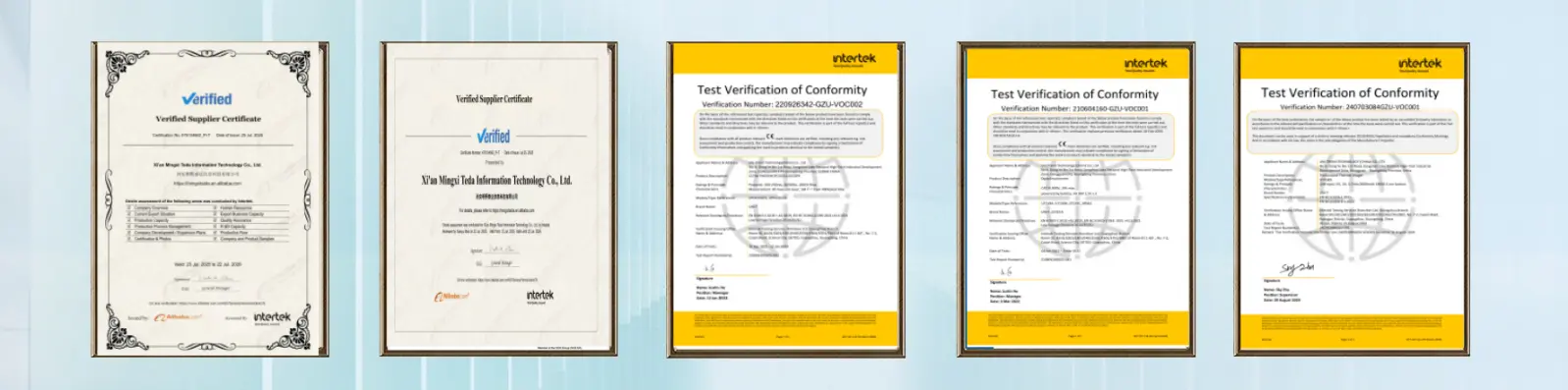

FAQs:
Q: Why does the lifespan of a relay shorten significantly, or even cause contact sticking, during 200V/2A full-load hot switching?
A:
The difference between hot and cold switching: Although the Pickering 40-136 claims to support a maximum of 200V and 2.5A, during hot switching (when the relay contacts close or open and the line is energized), the presence of capacitive or inductive loads can cause severe arcing at the moment of disconnection, resulting in the burning of the ruthenium film contacts.
Solution: Use cold switching whenever possible, i.e., activate the board first, then apply voltage and current from the power supply/load source. If hot switching cannot be avoided, a buffer RC network or varistor must be added to the circuit to suppress arcing.
Q: If a problem is suspected in channel 40-136 of the test system, how can it be quickly diagnosed and repaired?
A:
Diagnostic Tools: The 40-136 series is fully supported by Pickering eBIRST diagnostic testing tools. Simply plug in the eBIRST test adapter and run the test software to graphically pinpoint which relay contact is experiencing an open circuit, short circuit, or excessive resistance.
Spare Parts Repair: The 40-136 uses Pickering's high-quality built-in reed relays (manufactured by its sister company, Pickering Electronics). Because the module is built with non-SMT (through-hole soldering) technology, field maintenance is very simple; official Spare Relay Kits can be purchased.
Q: Is 40-136 a PXI board? Can it be plugged into a PXI Express (PXIe) chassis or a chassis with a Hybrid slot?
A:
40-136 is a standard 3U PXI (CompactPCI) module, using the bottom P1/J1 connector bus (33MHz 32-bit).
Chassis Compatibility: It cannot be inserted into a pure PXIe slot. However, it can be inserted into the standard PXI slots or PXI hybrid slots of most manufacturers' chassis (including NI, Pickering, and ADLINK) and will work normally.

Contact Us
Ready to integrate reliable Relay Module control into your system? Our team is here to help you select the right configuration and provide ongoing support.
Contact our technical specialists at manager03@mxtdinfo.com / manager02@mxtdinfo.com for detailed specifications, pricing information, or to discuss your custom requirements. We're committed to delivering the perfect PIL 40-136 Series Relay Module SPST DPST 2 Amp / 2.5Amp solution for your application needs.
Our customers’ satisfaction speaks for our quality — contact us to experience the same reliable service.
Our customers’ satisfaction speaks for our quality — contact us to experience the same reliable service.