- English
- French
- German
- Portuguese
- Spanish
- Russian
- Japanese
- Korean
- Arabic
- Greek
- German
- Turkish
- Italian
- Danish
- Romanian
- Indonesian
- Czech
- Afrikaans
- Swedish
- Polish
- Basque
- Catalan
- Esperanto
- Hindi
- Lao
- Albanian
- Amharic
- Armenian
- Azerbaijani
- Belarusian
- Bengali
- Bosnian
- Bulgarian
- Cebuano
- Chichewa
- Corsican
- Croatian
- Dutch
- Estonian
- Filipino
- Finnish
- Frisian
- Galician
- Georgian
- Gujarati
- Haitian
- Hausa
- Hawaiian
- Hebrew
- Hmong
- Hungarian
- Icelandic
- Igbo
- Javanese
- Kannada
- Kazakh
- Khmer
- Kurdish
- Kyrgyz
- Latin
- Latvian
- Lithuanian
- Luxembou..
- Macedonian
- Malagasy
- Malay
- Malayalam
- Maltese
- Maori
- Marathi
- Mongolian
- Burmese
- Nepali
- Norwegian
- Pashto
- Persian
- Punjabi
- Serbian
- Sesotho
- Sinhala
- Slovak
- Slovenian
- Somali
- Samoan
- Scots Gaelic
- Shona
- Sindhi
- Sundanese
- Swahili
- Tajik
- Tamil
- Telugu
- Thai
- Ukrainian
- Urdu
- Uzbek
- Vietnamese
- Welsh
- Xhosa
- Yiddish
- Yoruba
- Zulu
PIL 40-132 Series PXI Relay Module 2A
2. Up to 300VDC / 250VAC.
3. Maximum 2A (hot/cold switching).
4. Maximum 32 SPST routes / 19 DPST routes.
The PIL 40-132 series is a general-purpose 2A electromechanical relay module for the PXI platform from Pickering Interfaces.
PIL 40-132 series belonging to the Medium Power general-purpose relay product line, it is one of the core models in Pickering's switch matrix product portfolio, targeting medium-power, low-cost applications. This series of modules uses electromechanical relays (EMR), providing up to 32 independent relay switching channels on a single-slot 3U PXI card. Switching voltages can reach 300VDC/250VAC, with a maximum current of 2A and a maximum power of 60W. It is suitable for applications where the voltage or current capability of reed relay switch modules is insufficient.
As an important member of Pickering's medium-power general-purpose switch module family, the 40-132 series, along with the 40-131A (SPDT configuration), 40-136, 40-137, 40-138 (mixed configuration), and 40-139A (high density) series, constitutes a complete medium-power switch product line covering various contact forms (SPST, DPST, SPDT, and DPDT) and current ratings from 1A to 5A. The 40-132 series focuses on SPST and DPST normally open contact configurations, offering four configuration options—16/32 SPST and 16/19 DPST—while maintaining a rated parameter of 300VDC/250VAC/2A, to meet different density and pole number requirements.
Typical applications for this module series include: switching of medium-power AC/DC loads, slave control driving of large relays/contactors/solenoids, signal routing in functional test systems, and expansion of general-purpose switch resources in ATE test systems. User connection is achieved through a front-panel mounted 78-pin D-type male connector, which can be quickly integrated into test systems using Pickering's complete ecosystem of cables and connector accessories.
The 40-132 series PXI versions are compatible with all chassis conforming to 3U PXI and CompactPCI specifications, as well as Legacy and hybrid peripheral slots in PXIe chassis. They also support Pickering LXI or LXI/USB modular chassis, offering high deployment flexibility.
|
Type |
Features |
Illustrate |
|
Platform and Form |
Single-slot 3U PXI module |
Compatible with cPCI, PXI, PXIe mixed slots and LXI chassis |
|
Relay Type |
Electromechanical relay (EMR) |
Palladium-ruthenium alloy with gold-plated double-forked contacts, dedicated to medium-power switches |
|
Switching Voltage |
Up to 300VDC / 250VAC |
Suitable for switching between medium voltage AC/DC signals and loads |
|
Switching Current |
Maximum 2A (hot/cold switching) |
It can continuously carry 2A, and the peak pulse can reach 6A (100ms, 10% duty cycle) |
|
Channel Density |
Maximum 32 SPST routes / 19 DPST routes |
High channel density achieved with a single-slot 3U PXI card |
|
Contact Configuration |
SPST / DPST Optional |
Four models cover different combinations of pole number and channel number |
|
Operation Speed |
< 3ms |
Fast relay action improves test throughput |
|
Connector |
78-pin D-type male connector |
A unified front panel interface facilitates cable management |
|
Diagnostic Support |
eBIRST Switching System Test Tool |
Quickly locate faulty relays and graphically display the fault location |
|
Driver Support |
Kernel / IVI / VISA Driver |
Compatible with Windows, Linux and LabVIEW RT real-time systems |
Differentiation Advantages
Compared to other relay module series from the same manufacturer, Pickering, the 40-132 series offers the following differentiated advantages:
An optimal balance between medium voltage and current. Within Pickering's general-purpose relay product line, the 40-132 series, with its 300VDC/250VAC and 2A ratings, occupies a central position in the medium power range. Compared to the high-density 1A-class 40-145/148 series (150V/1A), the 40-132 series offers double the voltage and double the current capabilities, respectively, enabling it to handle higher power load switching. Compared to the higher-power 40-153 series (400VDC/250VAC/5A), the 40-132 series offers advantages in cost and channel density, making it suitable for applications requiring medium voltage but not high current.
The 40-132 series focuses on SPST/DPST normally open configurations. Unlike the 40-131A series (SPDT switching configuration) which also belongs to the medium power line category, the 40-132 series focuses on SPST and DPST normally open configurations. All relays are open by default, and a connection path from C to A is established after power is applied. This configuration is particularly suitable for applications requiring simple on/off switching, such as load on/off control and slave relay driving, and it is more cost-effective than the SPDT configuration with the same number of channels.
A mature and stable product line and complete ecosystem support. The 40-132 series, a long-standing general-purpose relay model in Pickering, boasts a complete product ecosystem: including the eBIRST troubleshooting tool, spare relay kits (91-100-001), a wide range of 78-pin D-type connector accessories (connectors, cable assemblies, junction boxes, DIN rail mounting terminal blocks, etc.), and full compatibility with mainstream testing software such as NI LabVIEW, TestStand, and Switch Executive.
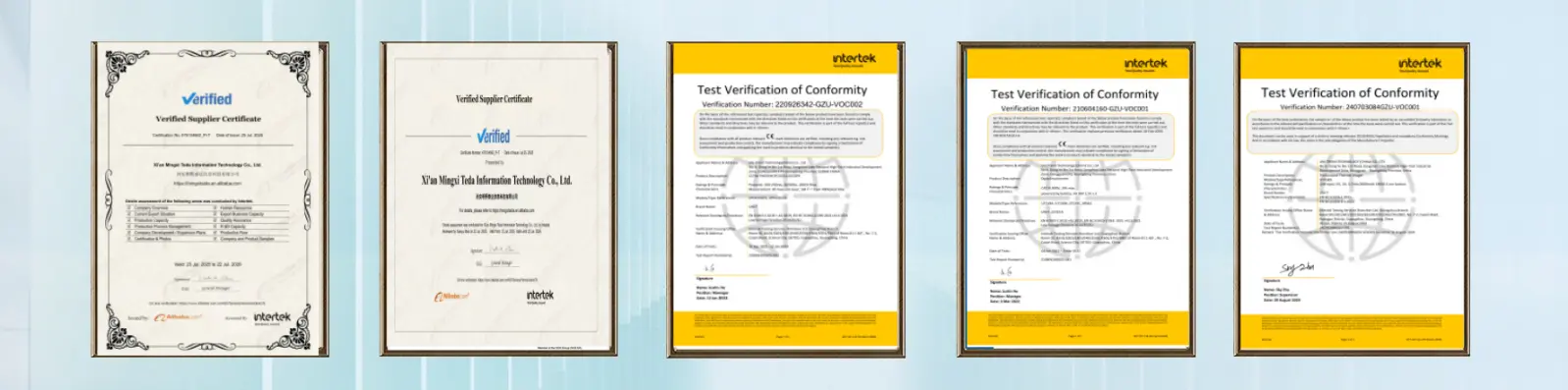
MXTD Supplier
Corporate Profile: Xi'an Mingxi Taida Information Technology Co., Ltd. (MXTD)
For over 12 years, Xi'an Mingxi Taida Information Technology Co., Ltd. (MXTD) has stood as a pioneering force in precision testing and industrial intelligent technology. We empower global enterprises with rugged, high-performance technical solutions. By seamlessly blending independent core R&D, global cross-border commerce, and full-lifecycle professional support, we deliver comprehensive, one-stop industrial infrastructure tailored for modern smart manufacturing and advanced engineering inspection.
Core R&D & Product Portfolio
Driven by breakthroughs in advanced industrial metrology and electronic engineering, MXTD specializes in the design and production of:
- High-end test equipment and professional measuring instruments
- PCIe/PXIe modular boards
- Core electronic components and industrial supporting gear
Our complete product ecosystem is engineered from the ground up to thrive in complex and harsh industrial environments, ensuring uncompromised accuracy and stability in mission-critical testing scenarios.
Product- PIL 40-132 Series PXI Relay Module 2A
The Pickering 40-132 series is a classic member of Pickering's medium-power general-purpose relay product line, and its development is closely related to Pickering's overall product evolution in the PXI switching field. Initially launched as a pure PXI platform product, this series offers both SPST and DPST normally open contact configurations. Together with the 40-131 series, which uses an SPDT configuration, it forms the basic product line of medium-power 2A general-purpose relays, covering the two most common relay application modes: normally open and switching.
With the increasing adoption of the PXI Express (PXIe) platform and growing user demand for relay health management, Pickering has launched the 40/42-132A series as a "form & fit" upgrade replacement for the 40-132. According to the official datasheet, the upgrades primarily include three aspects: a new PXIe platform option (model prefix 42-), the addition of relay cycle counting functionality, and an updated bus interface (requires a newer software driver). Aside from these changes, the electrical performance is very similar to the previous generation, and the software API and pin definitions are completely identical, ensuring backward compatibility.
The relay cycle counting function is a significant enhancement of the 40-132A compared to the 40-132. This function stores the number of operations for each contact on the module, which can be used to determine whether the relay is nearing the end of its service life (EOL) and allows users to adjust the system connection, swapping high-frequency signal paths with low-frequency paths, thereby extending the overall lifespan of the relay.
The generational evolution of the 40-132 series is as follows:
- First Generation (40-132): Pure PXI platform, including 4 models (40-132-101/201/102/202), without relay cycle counting function.
- Second Generation (40/42-132A): PXI + PXIe dual platform, including 8 models (4 PXI + 4 PXIe), adding relay cycle counting and updating the bus interface; electrical performance and pin definitions are fully compatible with the first generation.
The Key Value of The PIL 40-132 Series PXI Relay Module 2A
Within Pickering's overall medium-power product line, the 40-132 series is parallel/complementary to the following series:
|
Series |
Contact Configuration |
Voltage/Current |
Features |
|
40-100 |
SPDT |
200VDC/140VAC, 2A |
83-channel ultra-high density SPDT |
|
40-130 |
DPDT |
220VDC/125VAC, 2A |
8 or 13-channel DPDT |
|
40-131A |
SPDT |
300VDC/250VAC, 2A |
16 or 26-channel switching type |
|
40-132/132A |
SPST/DPST |
300VDC/250VAC, 2A |
16/32-channel SPST or 16/19-channel DPST normally open type |
|
40-136 |
SPST/DPST |
200V, 1A/2.5A |
Multiple power levels |
|
40-137 |
SPST |
110VDC/250VAC, 5A/2A |
5A class power relay |
|
40-138 |
Mixed SPST/DPST/SPDT/DPDT |
300VDC/250VAC, 2A |
Flexible hybrid configuration |
|
40-139A |
High density and multiple configurations |
150VDC/100VAC, 1A |
Highest density general purpose relay |
Key Functions of The PIL 40-132 Series PXI Relay Module 2A
The core function of the Pickering 40-132 series is to provide multiple independent medium-power electromechanical relay switching channels for controlling the on/off state of signals or loads in automated test systems. Each relay is independently controllable and can be operated individually or combined to build more complex switching topologies.
This series offers two basic contact configurations, each corresponding to a different functional mode:
SPST (Single Pole Single Throw) configuration – corresponding to models 40-132-101 (16 channels) and 40-132-201 (32 channels). SPST relays are normally open; by default, the signal path between terminals C and A is disconnected. When a specific relay is energized, a conductive path is established between terminals C and A. This configuration is suitable for simple load on/off control, signal channel selection, and other applications.
DPST (Double Pole Single Throw) configuration – corresponding to models 40-132-102 (16 channels) and 40-132-202 (19 channels). The DPST relay is also normally open; by default, all signal paths are disconnected. Upon power-up, both poles (C1.1-A1.1 and C1.2-A1.2) of the same channel are simultaneously connected. The DPST configuration is suitable for applications requiring simultaneous switching of two independent paths, such as differential signal switching, two-wire control, or applications requiring simultaneous switching of signal and power circuits.
The module receives control commands via the PXI backplane interface. The relay coil on the driver board generates electromagnetic force, attracting the armature to close or open the contacts. The relay's operating time (from energization to stable contact closure) is less than 3ms, which is relatively fast for electromechanical relays and helps improve the throughput of the test system.
In the upgraded 40-132A version, the module incorporates a relay cycle counting function. Each relay operation is recorded and stored on the module, and users can read the cumulative number of operations for each contact via software. This function allows system maintenance personnel to predict the end of the relay's lifespan in advance and perform preventative maintenance in a planned manner, avoiding unplanned downtime.
The PIL 40-132 Series PXI Relay Module 2A (first generation, pure PXI platform) includes the following 4 models:
| Model | Contact Configuration | Number of Relays | Extreme Number | Connector | Platform |
| 40-132-101 | SPST ( Open) | 16 | 1 | 78-pin D-type Male Connector | PXI |
| 40-132-201 | SPST (Open) | 32 | 1 | 78-pin D-type Male Connector | PXI |
| 40-132-102 | DPST (Open) | 16 | 2 | 78-pin D-type Male Connector | PXI |
| 40-132-202 | DPST (Open) | 19 | 2 | 78-pin D-type Male Connector | PXI |
The upgraded 40/42-132A series has expanded to eight models, covering both PXI and PXIe platforms:
|
Model |
Platform |
Contact Configuration |
Number of Relays |
Extreme Number |
Connector |
Period Count |
|
40-132A-101 |
PXI |
SPST |
16 |
1 |
78-pin D-type Male Connector |
✅ |
|
40-132A-201 |
PXI |
SPST |
32 |
1 |
78-pin D-type Male Connector |
✅ |
|
40-132A-102 |
PXI |
DPST |
16 |
2 |
78-pin D-type Male Connector |
✅ |
|
40-132A-202 |
PXI |
DPST |
19 |
2 |
78-pin D-type Male Connector |
✅ |
|
42-132A-101 |
PXIe |
SPST |
16 |
1 |
78-pin D-type Male Connector |
✅ |
|
42-132A-201 |
PXIe |
SPST |
32 |
1 |
78-pin D-type Male Connector |
✅ |
|
42-132A-102 |
PXIe |
DPST |
16 |
2 |
78-pin D-type Male Connector |
✅ |
|
42-132A-202 |
PXIe |
DPST |
19 |
2 |
78-pin D-type Male Connector |
✅ |
Switching Characteristics
|
Parameter |
Value |
Remark |
|
Switch Type |
Electro-Mechanical |
/ |
|
Contact Materials |
Palladium-ruthenium alloy, gold-plated to cover double forks |
Palladium-Ruthenium, Gold Covered Bifurcated |
|
Maximum Switching Voltage |
300VDC / 250VAC |
The signal source must be completely isolated from mains power and a safe ground |
|
Maximum Switching Current |
2A |
Both hot and cold switching are possible |
|
Maximum Continuous Carrying Current |
2A |
/ |
|
Maximum Pulse Carrying Current |
6A, lasting 100ms |
Single-switch path, maximum duty cycle 10%. |
|
Maximum power |
62.5VA / 60W |
60W at 30V~220VDC; 30W at 30V~300VDC (resistive load) |
|
Initial on-resistance |
< 500mΩ |
/ |
|
Disconnect Resistor |
> 10⁹ Ω |
/ |
|
Thermal Offset Voltage |
< 5µV(40-132A) |
The original version of 40-132 is < 10µV. |
|
Operation Time |
< 3ms |
/ |
Software User Manual
The Pickering 40-132 series offers complete driver support, covering a variety of driver architectures and operating systems:
-
Kernel Drivers (Direct I/O). Pickering provides kernel-level drivers (pilpxi) that can directly access PXI boards without the VISA middleware layer, making them suitable for use in general Windows programming environments such as Visual C++ and Visual Basic. Direct I/O drivers have similar overall functionality to VISA drivers, with little difference in operating speed, but their integration with VISA environments such as LabVIEW is lower.
-
Kernel Drivers (Direct I/O). Pickering provides kernel-level drivers (pilpxi) that can directly access PXI boards without the VISA middleware layer, making them suitable for use in general Windows programming environments such as Visual C++ and Visual Basic. Direct I/O drivers have similar overall functionality to VISA drivers, with little difference in operating speed, but their integration with VISA environments such as LabVIEW is lower.
-
IVI Driver (IVI-C). Pickering provides an IVI-C compliant switch driver (pi40iv) that supports all IVI-compatible systems, particularly suitable for applications requiring switch path management using NI Switch Executive. The IVI driver requires VISA and the IVI Compatibility Package (ICP) to be pre-installed, and the basic VISA driver must be installed first.
-
.NET Driver. Pickering also provides a .NET driver, which is particularly suitable for use in .NET programming environments and supports languages such as C# and VB.NET.
Operating System Support
| Operating System | Support Status |
| Windows (all Microsoft-supported versions and popular older versions) |
Kernel, VISA, IVI, and .NET drivers are all supported. |
| Linux (mainstream distributions) | Provide Driver Support |
| LabVIEW Real-Time(Pharlap) | VISA Driver Support |
| LabVIEW Real-Time(Linux-RT) | VISA Driver Support |
For LabVIEW RT systems, Pickering provides a dedicated pi40ivrt driver version that supports access to Pickering PXI products from both Windows and LabVIEW RT environments (but not LXI products). Using the IVI driver on an RT system requires manually copying the relevant DLL and INI files to the RT target system.
The PIL 40-132 Series PXI Relay Module 2A drivers can be used with a variety of programming environments and applications, including but not limited to:
-
Pickering proprietary tools: Switch Path Manager (signal routing software), General Soft Front Panel (GSFP, front panel control software), eBIRST diagnostic tools.
-
National Instruments products: LabVIEW, LabWindows/CVI, Switch Executive, MAX, TestStand, VeriStand, etc.
-
Microsoft Visual Studio: Visual Basic, Visual C++, C#
-
Programming languages: C, C++, C#, Python
-
Keysight products: VEE, OpenTAP
-
MathWorks: MATLAB, Simulink
-
Others: Marvin ATEasy, MTQ Testsolutions, Tecap Test & Measurement Suite
When selecting a specific model in the PIL 40-132 Series PXI Relay Module 2A, it is recommended to consider the following aspects:
- Platform Type: For newly built PXIe systems, prioritize the 42-132A series (PXIe version); for existing PXI systems or systems requiring LXI compatibility, choose the 40-132A (PXI version); for maintenance of deployed legacy systems, the older 40-132 model can continue to be used, but new designs should switch to the A series.
- Contact Configuration: Select SPST for simple on/off control; select DPST for synchronous switching of two paths (differential, two-wire).
- Channel Density: Select the 16-channel or 32/19-channel version based on the actual required number of channels, leaving appropriate margin for future expansion.
-
Health Management Requirements: For systems requiring relay life monitoring and predictive maintenance functions, the 40/42-132A series (with cycle counting function) must be selected. 5. Diagnostic tools: It is recommended to purchase the eBIRST testing tool (93-005-001) as a supplement, which can significantly reduce system maintenance costs and downtime.
Bespoke Engineering & Customization Services
Standard, off-the-shelf equipment often falls short when facing highly specialized technical challenges. To bridge this gap, our expert engineering team delivers comprehensive, built-to-order OEM and ODM customization services precisely aligned with your unique operational workflows.
We collaborate openly with your technical teams to transform complex project requirements into optimized hardware. Our agile development framework supports customized configurations across critical engineering vectors, including:
-
Tailored Electronic Parameters: Engineering specific frequency ranges, optimized signal paths, and specialized triggering mechanisms.
-
Custom Enclosures & Form Factors: Designing ruggedized housings, tailor-made structural chassis, and application-specific mounting hardware.
-
Flexible Hardware Integration: Modifying existing PCIe/PXIe board layouts to match legacy systems or unique interface requirements.
Our adaptive engineering methodology ensures that your most demanding application goals are met seamlessly—all while upholding our strict, uncompromising quality benchmarks from prototype to final delivery.

Why Choose MXTD?
Global Supply & Service Network
With an international footprint spanning four continents—North America, South America, Europe, and Africa—MXTD bridges the gap between cutting-edge technology and global deployment. We streamline international procurement chains by combining our proprietary technologies with exclusive distribution partnerships with world-renowned industrial brands. This hybrid model allows us to deliver:
-
Standardized product supply
-
Bespoke, customized engineering solutions
-
Rapid and efficient global logistics
Quality Assurance & Sustainable Value
Quality is the definitive cornerstone of MXTD’s global reputation. To minimize operational risks for our partners, every unit undergoes:
-
Rigorous standardized validation
-
High-precision calibration protocols
-
Multi-environmental stress testing
By enforcing strict quality benchmarks across all production and service workflows, we deliver exceptionally stable, accurate, and durable industrial systems that generate sustainable long-term value for enterprises worldwide.
Typical Applications of The 40-132 Series Include:
-
Medium-power AC/DC load switching. When test systems require controlling the switching of medium-power supplies, loads, or peripherals, the 40-132 series' 2A/300VDC/250VAC ratings meet most medium-power needs. Compared to reed relay modules, electromechanical relays can withstand higher voltages and currents, making them suitable for driving larger loads.
-
Slave drive for large relays/contactors/solenoids. In applications requiring switching of higher power loads, the 40-132 series module can be used as a "slave switch" to drive the coils of external large relays, contactors, or solenoids. The external relay handles the high-power load, while the 40-132 module provides the control signal for switching.
-
Switching resources for general-purpose ATE test systems. In functional test and production test systems, the 40-132 series can be used as a general-purpose switching resource for various purposes such as signal routing, test point selection, and peripheral control. Its independently controllable channel structure allows users to flexibly configure the switch topology according to actual needs.

FAQs:
Q: Why are circuit boards easily damaged when switching inductive loads (such as solenoid valves and motors)?
A:
Inductive loads generate a large back electromotive force (surge voltage) upon disconnection, causing arcing between relay contacts, which can burn out the contacts or cause them to stick together.
Solution: A protective network must be added to the external circuit. A freewheeling diode should be connected in parallel in the DC circuit; an RC snubber should be connected in parallel in the AC circuit.
Q: How can I quickly determine which relay on the 40-132 board is faulty?
A:
This board fully supports Pickering's official eBIRST automated switch system testing tool.
Operation: Remove the external test cables, plug the eBIRST test adapter into the board's 78-pin D-Type connector, and run the eBIRST software. It will automatically measure the contact resistance of all contacts within minutes and visually indicate the location of the faulty relay in a graphical interface, facilitating chip-level replacement.
Q: How to control a 40-132 board in a Windows or Linux system?
A:
Pickering provides a standard PIPXI driver, while also supporting VISA and IVI drivers.
Control methods: In LabVIEW/C++/Python, the `pipxi_OpBit` or `pipxi_WriteSub` functions can be used to control the opening and closing of specific relays by passing in "subunits" and "bits".
If using an IVI driver, cross-platform interchangeable programming is possible through the standard `piSwitch` interface.
Q: Why is there a delay when multiple relays are closed consecutively in the code, as observed in actual measurements?
A:
The hardware operating speed of the 40-132 is approximately 3ms. If the software sends multiple single control commands consecutively without sufficient settling time, the test instrument may sample before the relay contacts have fully stabilized, resulting in measurements of open circuits or incorrect resistance values. Appropriate settling time parameters should be incorporated into the programming.

Contact Us
Ready to integrate reliable Relay Module control into your system? Our team is here to help you select the right configuration and provide ongoing support.
Contact our technical specialists at manager03@mxtdinfo.com / manager02@mxtdinfo.com for detailed specifications, pricing information, or to discuss your custom requirements. We're committed to delivering the perfect PIL 40-132 Series PXI Relay Module 2A solution for your application needs.
Our customers’ satisfaction speaks for our quality — contact us to experience the same reliable service.
Our customers’ satisfaction speaks for our quality — contact us to experience the same reliable service.