- English
- French
- German
- Portuguese
- Spanish
- Russian
- Japanese
- Korean
- Arabic
- Greek
- German
- Turkish
- Italian
- Danish
- Romanian
- Indonesian
- Czech
- Afrikaans
- Swedish
- Polish
- Basque
- Catalan
- Esperanto
- Hindi
- Lao
- Albanian
- Amharic
- Armenian
- Azerbaijani
- Belarusian
- Bengali
- Bosnian
- Bulgarian
- Cebuano
- Chichewa
- Corsican
- Croatian
- Dutch
- Estonian
- Filipino
- Finnish
- Frisian
- Galician
- Georgian
- Gujarati
- Haitian
- Hausa
- Hawaiian
- Hebrew
- Hmong
- Hungarian
- Icelandic
- Igbo
- Javanese
- Kannada
- Kazakh
- Khmer
- Kurdish
- Kyrgyz
- Latin
- Latvian
- Lithuanian
- Luxembou..
- Macedonian
- Malagasy
- Malay
- Malayalam
- Maltese
- Maori
- Marathi
- Mongolian
- Burmese
- Nepali
- Norwegian
- Pashto
- Persian
- Punjabi
- Serbian
- Sesotho
- Sinhala
- Slovak
- Slovenian
- Somali
- Samoan
- Scots Gaelic
- Shona
- Sindhi
- Sundanese
- Swahili
- Tajik
- Tamil
- Telugu
- Thai
- Ukrainian
- Urdu
- Uzbek
- Vietnamese
- Welsh
- Xhosa
- Yiddish
- Yoruba
- Zulu
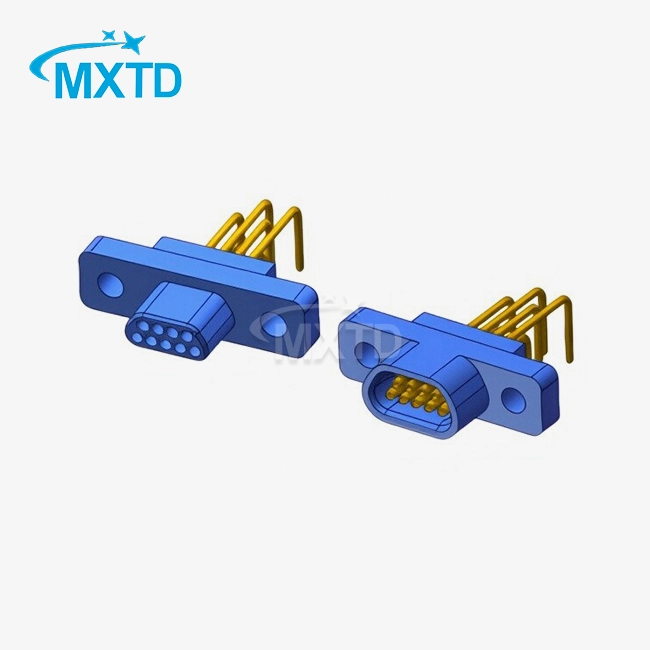
YF6A-40ZK or TJ Separation (Breakaway) Electrical Connector
2.Mechanical Separation: Precision breakaway mechanism with calibrated separation force.
3.Fireproof & Explosion-Proof: Receptacle designed to withstand fire and explosive environments.
4.1553B Data Bus Integration: Mixed configuration with high-frequency contacts for MIL-STD-1553B data transmission.
5.Hybrid Termination: High-frequency contacts crimp-terminated; low-frequency contacts solder-terminated.
6.40-Contact Capacity: Φ1.0 contacts rated at 5 A (≤10 mΩ) for signal and low-power circuits.
YF6A-40ZK/TJ Separation (Breakaway) Electrical Connector | Fireproof & Explosion-Proof with 1553B Data Bus Integration
The YF6A‑40ZK/TJ Separation Connector series represents a breakthrough in integrated data bus and signal transmission within a single, fireproof separation interface. Featuring 40 gold‑plated Φ1.0 contacts rated at 5 A, this connector is uniquely configured to support MIL‑STD‑1553B data bus protocols alongside conventional low‑frequency circuits—eliminating the need for separate data connectors in critical aerospace and defense applications. The receptacle is engineered with fireproof and explosion‑proof characteristics, ensuring survival in extreme hazard scenarios. With hybrid termination (crimp for high‑frequency, solder for low‑frequency), calibrated 58.8–98 N separation force, and proven resistance to severe vibration and shock, the YF6A‑40 is the preferred choice for launch vehicles, aircraft pylons, and naval systems requiring integrated data bus capability with enhanced safety.
Product Descriptions from the Supplier
The YF6A‑40ZK/TJ Separation (Breakaway) Electrical Connector is an advanced interconnect solution engineered for applications requiring both conventional signal transmission and MIL‑STD‑1553B data bus communication within a single, fireproof separation interface. Fully compliant with enterprise standard Q/21EJ275, this connector features 40 solder‑terminated (low‑frequency) Φ1.0 contacts rated at 5 A each with a maximum contact resistance of 10 mΩ, plus integrated high‑frequency contacts configured for 1553B data bus protocols.
A defining feature is the fireproof and explosion‑proof receptacle, designed to withstand extreme thermal and blast events—critical for engine bays, weapon systems, and launch vehicle interfaces where post‑event integrity is essential.
The connector offers hybrid termination to optimize reliability for each signal type:
- High‑frequency contacts (1553B data bus): Crimp termination for controlled impedance and repeatable performance
- Low‑frequency contacts: Solder termination for dependable, field‑serviceable connections
The mechanical separation mechanism is calibrated to release with a force of 58.8–98 N, providing a secure hold during operation while ensuring positive separation when commanded.
Engineered for harsh environments, the YF6A‑40 operates from -55 °C to +125 °C and survives severe dynamic conditions: random vibration of 0.3 G²/Hz (20 Grms), sinusoidal vibration of 150 m/s², shock of 735 m/s², and constant acceleration of 30 g. With a mechanical life of 500 mating cycles, these connectors are suitable for ground testing and operational reuse.
Dielectric withstanding voltage is 1000 V AC rms at sea level, derated to 500 V under humidity and 150 V at low pressure (1 kPa). Insulation resistance exceeds 1000 MΩ at room temperature, remains ≥500 MΩ at high temperature, and stays ≥20 MΩ after humidity testing, ensuring long‑term reliability.
Available in two configurations:
- YF6A‑40TJ: Plug (cable‑attached half) with pin contacts
- YF6A‑40ZK: Receptacle (panel‑mount half) with socket contacts (fireproof/explosion‑proof)
Typical applications include launch vehicle umbilicals with 1553B monitoring, aircraft external store data interfaces, naval combat system connections, and any application requiring integrated data bus capability with fire/explosion protection.
Specifications
| Parameter | Performance |
|---|---|
| Mechanical Separation Force | 58.8 – 98 N |
| Mechanical Life | 500 cycles minimum |
| Random Vibration | 0.3 G²/Hz, 20 Grms total |
| Sinusoidal Vibration | 150 m/s² |
| Shock (Peak Acceleration) | 735 m/s² |
| Constant Acceleration | 30 g |
| Operating Temperature | -55°C to +125°C |
| Receptacle Protection | Fireproof & Explosion-Proof |
Applications
- Launch Vehicles: Umbilical disconnects with 1553B data bus monitoring.
- Aircraft: External store separation with smart weapon data interfaces.
- Naval Systems: Combat system connections requiring fire-safe disconnects.
- Missile Systems: Canister launch interfaces with integrated data bus.
- Spacecraft: Stage separation with telemetry data transmission.
- Industrial: Hazardous area disconnects requiring explosion-proof ratings.
Functionality
- Integrated 1553B Data Bus: High-frequency contacts support MIL-STD-1553B protocols alongside conventional signals.
- Fireproof/Explosion-Proof Receptacle: Withstands extreme thermal and blast events.
- Hybrid Termination: Crimp for HF (controlled impedance), solder for LF (field serviceability).
- Controlled Separation Force: Calibrated 58.8–98 N breakaway ensures positive release.
- Environmental Robustness: Withstands extreme temperature, vibration, shock, and acceleration.
- High Contact Density: 40 circuits in a single separation interface.
Key Features
- Data Bus Integration: Eliminates separate 1553B connectors—saves space and weight.
- Fire/Explosion Protection: Receptacle certified for hazardous environments.
- Hybrid Termination Optimization: Best method for each signal type.
- Aerospace‑Grade Qualification: Tested to rigorous vibration, shock, and acceleration standards.
- Solder & Crimp Options: Field‑serviceable LF contacts; precision HF contacts.
- 500‑Cycle Life: Suitable for ground testing and multiple mission uses.
- Wide Temperature Range: -55 °C to +125 °C suits harsh environments.
- High Insulation Resistance: ≥1000 MΩ at room temperature ensures signal integrity.
Custom Design
The YF6A‑40 platform can be adapted to meet unique mission requirements:
- Custom HF/LF Contact Mix: Adjust the quantity of 1553B data bus contacts vs. standard signal contacts.
- Separation Force Adjustment: Modify breakaway force for specific release requirements.
- Enhanced Fire Rating: Higher temperatures or longer duration available on request.
- Special Materials: Select shell finishes for enhanced corrosion resistance.
- Cable Assembly Integration: Complete harness solutions with hybrid terminations and overmolding.
- Non‑Standard Testing: Additional screening for high‑reliability programs.

Why Choose MXTD
At MXTD, we specialize in separation connectors that integrate advanced data bus capabilities with enhanced safety features. The YF6A‑40 series exemplifies our engineering excellence—combining MIL‑STD‑1553B data bus integration, fireproof/explosion‑proof receptacle, and 40‑contact density in a single, field‑proven package. Manufactured under strict enterprise standard Q/21EJ275, each YF6A‑40 undergoes comprehensive testing including separation force verification, contact resistance measurement, and environmental qualification. Our team brings decades of experience in aerospace and naval separation systems, working closely with customers to ensure that every interface meets the unique demands of the mission. When you choose MXTD, you're partnering with a dedicated team focused on the success of your program, from prototype to production.


FAQ
Q: What makes the YF6A‑40 unique among separation connectors?
A: It integrates MIL‑STD‑1553B data bus capability with conventional signal circuits in a fireproof/explosion‑proof receptacle—ideal for smart weapons, launch vehicles, and combat systems.
Q: What is the separation force range?
A: The mechanical separation force is calibrated between 58.8 N and 98 N.
Q: How many contacts are there, and what are their ratings?
A: 40 total Φ1.0 contacts rated at 5 A each (≤10 mΩ), with a configurable mix of low‑frequency and 1553B high‑frequency contacts.
Q: What termination methods are used?
A: Hybrid termination: high‑frequency (1553B) contacts are crimp‑terminated for controlled impedance; low‑frequency contacts are solder‑terminated for field serviceability.
Q: What is the fire/explosion protection rating?
A: The receptacle is designed to withstand fire and explosive environments—specific test details available on request.
Q: What vibration and shock levels can it withstand?
A: Random vibration 0.3 G²/Hz (20 Grms), sinusoidal 150 m/s², shock 735 m/s², acceleration 30 g.
Q: What is the operating temperature range?
A: -55°C to +125°C.
Q: What is the difference between YF6A‑40TJ and YF6A‑40ZK?
A: YF6A‑40TJ is the plug (cable‑attached half) with pin contacts; YF6A‑40ZK is the receptacle (panel‑mount half) with socket contacts and fireproof/explosion‑proof construction.
Q: What is the insulation resistance after humidity testing?
A: ≥20 MΩ, ensuring reliable signal transmission.
Q: Do you provide mating connectors?
A: Yes, both plug and receptacle versions are available. Please specify your configuration and desired HF/LF contact mix when ordering.

Contact Us
Ready to integrate a fireproof separation connector with 1553B data bus capability into your next‑generation aerospace or defense system? Our technical experts are standing by to discuss your specific application requirements and recommend the optimal YF6A‑40 configuration—from HF/LF contact mix to separation force and custom testing.
Whether you need standard units for immediate deployment or custom‑engineered solutions for next‑generation systems, we're here to help you achieve your mission objectives.
Reach out to our team today: manager04@mxtdinfo.com
Let us show you how our YF6A‑40 series separation connectors can deliver integrated data bus performance with unmatched fire and explosion protection
Our customers’ satisfaction speaks for our quality — contact us to experience the same reliable service.